Saudi Arabia to host sixth Hajj Conference and Exhibition in Jeddah
Saudi Arabia's Ministry of Hajj and Umrah will host the sixth Hajj Conference and Exhibition in Jeddah from November 8 t...
10th Dhul Hijjah, Pelting, Sacrifice, Tawaf al-Ifadah, Days of Tashriq, and Farewell
You have already traversed the most transformative stages of the Hajj pilgrimage. Before we continue into the second half, let us recall the path that has brought you here:
You now stand on the morning of the 10th of Dhul Hijjah, the greatest day of the entire Hajj - and one of the greatest days in the Islamic calendar. Everything that follows in this guide will take you from this moment through the completion of every remaining rite, until you bid farewell to the House of Allah.
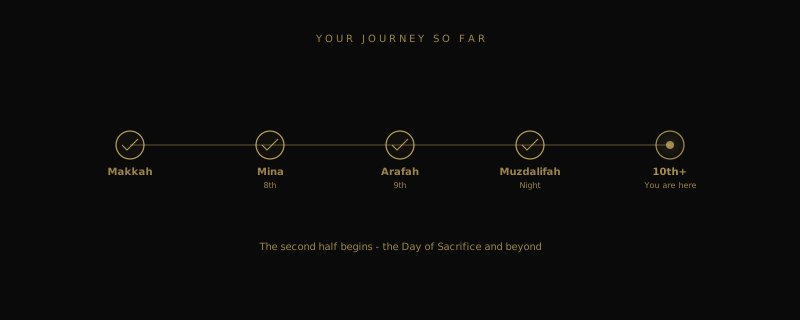
The 10th of Dhul Hijjah is called Yawm al-Nahr - the Day of Sacrifice - because it is the day on which the sacrificial animals are slaughtered. While you are in the sacred precincts completing your pilgrimage, over a billion Muslims around the world celebrate Eid al-Adha, commemorating the willingness of Ibrahim (AS) to sacrifice his son Ismail (AS) in obedience to Allah’s command.
This is not just any day. It is, according to the Prophet (SAW), the single greatest day of the year:
“The greatest day in the sight of Allah, the Mighty and Sublime, is the Day of Sacrifice.”
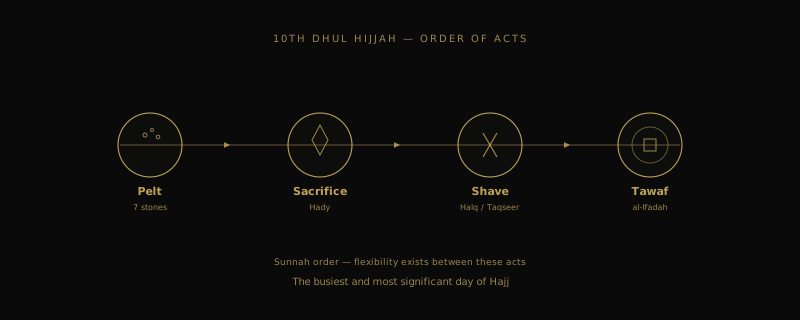
Abu Dawud 1765This is also the busiest day of Hajj. Multiple major rites are performed on this single day. Here is an overview of everything that lies ahead:
The Prophet (SAW) prayed Fajr at Muzdalifah at its earliest permissible time. This is one of the rare occasions where the Sunnah specifically emphasizes praying at the beginning of the window rather than waiting. After praying, the Prophet mounted his camel and rode to al-Mash’ar al-Haram (the sacred monument), where he faced the Qiblah and made dua, supplicating to Allah, declaring His greatness, and proclaiming His oneness.
Jabir (RA) reported: “He (the Prophet SAW) then came to al-Mash’ar al-Haram, faced the Qiblah, made dua to Allah, declared His greatness, and proclaimed His oneness. He kept standing until the daylight was very clear.”
Sahih Muslim 1218Stand at Muzdalifah, face the Qiblah, raise your hands, and call upon Allah with whatever is in your heart. Ask for forgiveness. Ask for your family. Ask for the Ummah. This is a blessed station where duas are answered.
Tip: The Prophet (SAW) departed Muzdalifah before sunrise when it became very light but while the sun had not yet risen. Do not wait for sunrise - depart as soon as the sky is bright. Departing after sunrise contradicts the Sunnah and was the practice of the pre-Islamic Quraysh, which the Prophet deliberately opposed.
The Sunnah order of acts on this day is: Pelting → Sacrifice → Shaving → Tawaf al-Ifadah. The Prophet (SAW) performed them in this order. However, the order is recommended (Sunnah), not obligatory (wajib). The evidence for this flexibility is explicit:
A man came to the Prophet (SAW) and said: “I shaved before I sacrificed.” He said: “Sacrifice, and there is no harm.” Another said: “I sacrificed before I pelted.” He said: “Pelt, and there is no harm.” He was not asked about anything being done before or after its proper time on that day but he said: “Do it, and there is no harm.”
Sahih Bukhari 83, 84Fiqh Note: All four Sunni madhabs agree that performing the acts of the 10th in a different order is valid. The Hanafi school holds that changing the order is makruh (disliked) but does not require a penalty. The Shafi’i, Maliki, and Hanbali schools also consider the order a Sunnah, not an obligation. If you end up doing things out of order due to crowds or logistics, there is no penalty and no sin.
Tip: Many pilgrims delay Tawaf al-Ifadah to the 11th or 12th to avoid the extreme congestion at the Haram on the 10th. This is perfectly permissible and often practically wise. Do not feel pressured to do everything on the 10th if conditions are difficult.
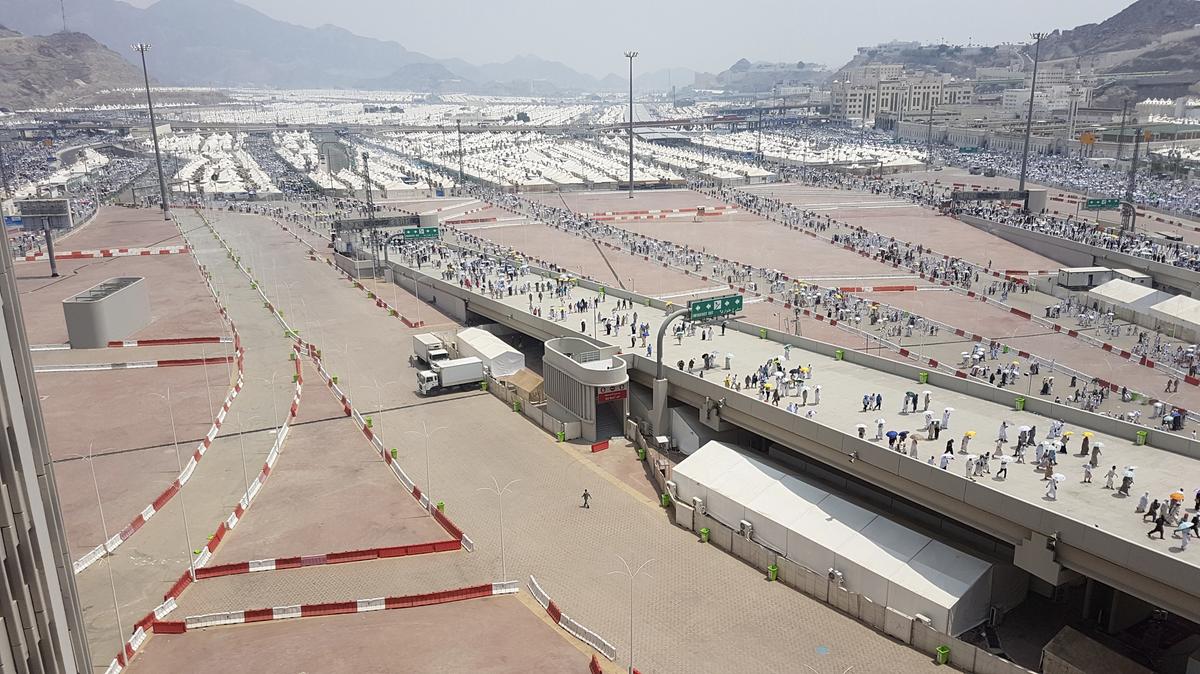
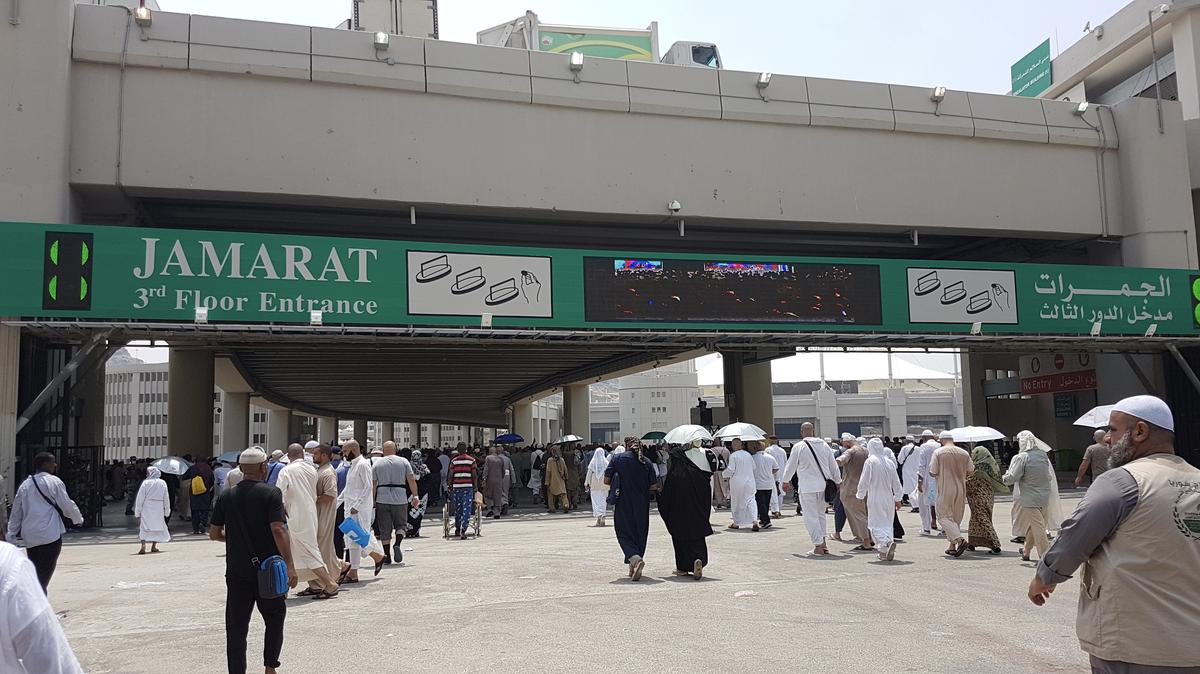
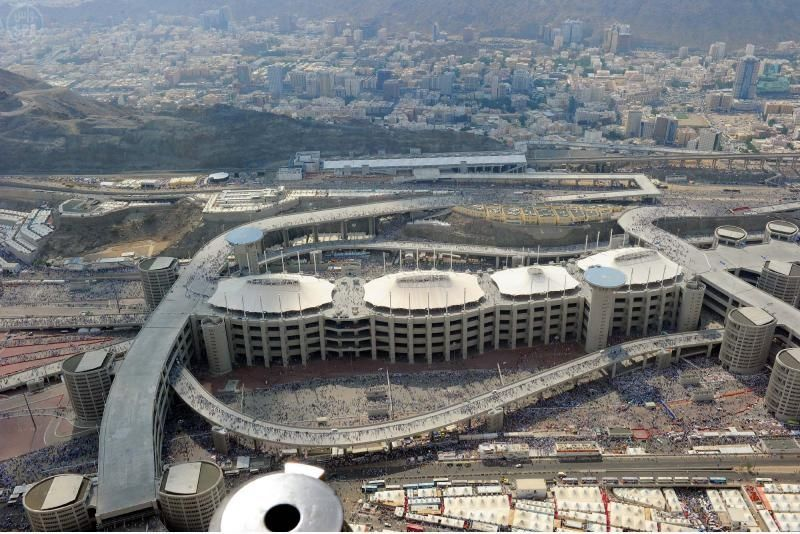
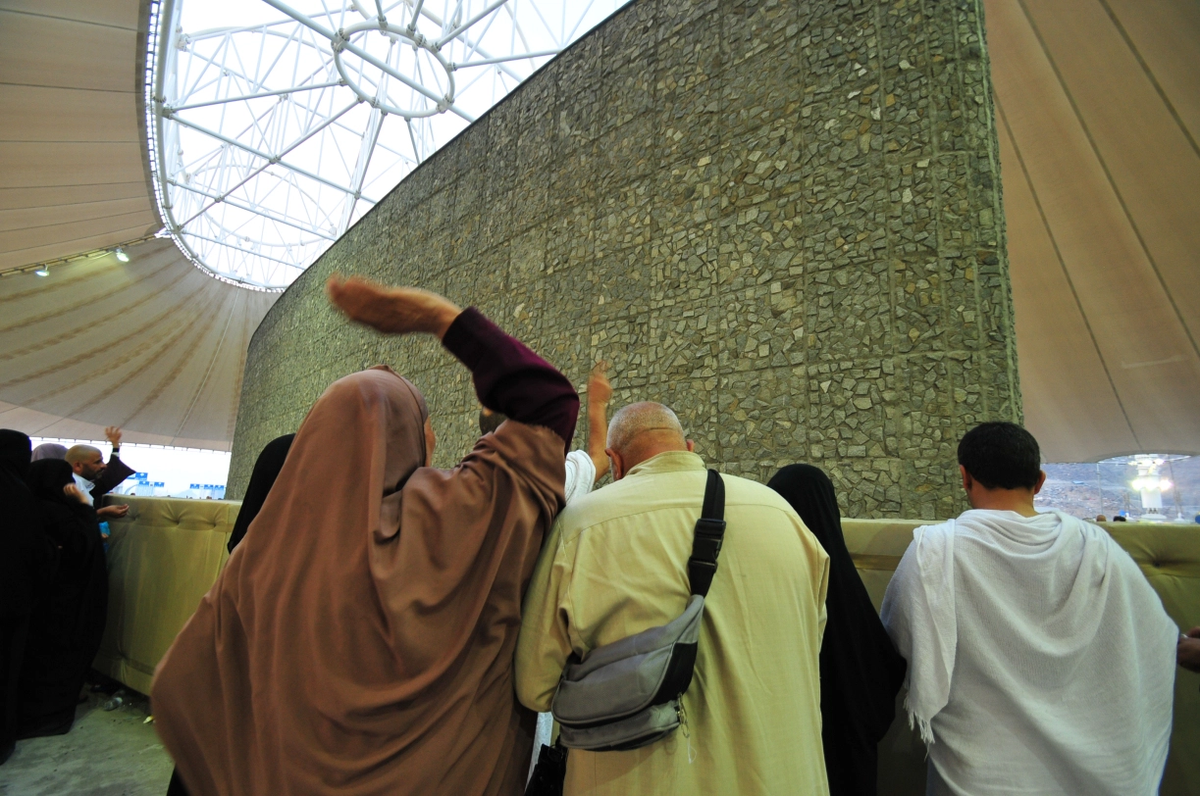
This is the first major rite of the 10th. Upon arriving at the Jamarat area in Mina, you will pelt only the Big Jamarah - Jamarah al-Aqabah. On this day, you do NOT pelt the small or medium Jamarah. Those are for the Days of Tashriq only.
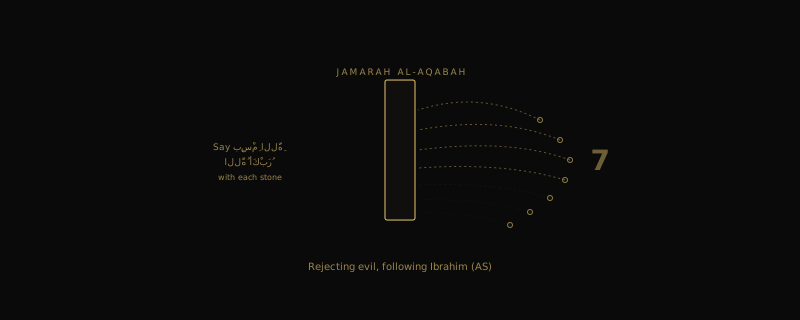
Ibn Mas’ud (RA) reported that the Prophet (SAW) faced the Jamarah with Makkah to his left and Mina to his right, and pelted it with seven pebbles, saying “Allahu Akbar” with each one.
Sahih Bukhari 1750When you throw the first pebble at Jamarah al-Aqabah, you stop reciting the Talbiyah. The Talbiyah of Hajj ends at this moment. From this point onward, you will no longer say “Labbayk Allahumma Labbayk”. The call has been answered. You have arrived.
Al-Fadl ibn Abbas (RA) reported that the Prophet (SAW) continued to recite the Talbiyah until he pelted Jamarah al-Aqabah.
Sahih Bukhari 1544, Sahih Muslim 1281The pelting of the Jamarat is not a mere ritual - it is the re-enactment of one of the most powerful moments in the history of faith. When Allah commanded Ibrahim (AS) to sacrifice his beloved son Ismail (AS), the Shaytan appeared to Ibrahim three times along the way, trying to dissuade him from obeying Allah’s command. Each time, Ibrahim (AS) rejected the Shaytan and pelted him with stones until he disappeared.
“When Ibrahim (AS) was taken to perform the rites of Hajj, the Shaytan appeared to him at the Jamarah al-Aqabah. Ibrahim pelted him with seven stones until he disappeared. Then the Shaytan appeared to him at the Middle Jamarah, and he pelted him with seven stones until he disappeared. Then the Shaytan appeared to him at the Small Jamarah, and he pelted him with seven stones until he disappeared.”
Musnad AhmadThe three Jamarat mark the three locations where the Shaytan made his stand - and where Ibrahim (AS) drove him away with unwavering obedience to Allah.
What to bring:
What to expect:
Tip: You can pelt the Big Jamarah on the 10th at any time from Fajr of the 10th until Fajr of the 11th. The morning rush after Fajr is the most congested time. If possible, go after Zuhr when crowds thin out, or later in the afternoon. There is no virtue in pelting early if it means endangering yourself or others.
Warning: Throw ONLY small pebbles. Do NOT throw shoes, sandals, large rocks, or any other objects. This is strictly forbidden, extremely dangerous, and has caused injuries and deaths at the Jamarat. The Prophet (SAW) instructed pebbles the size of date seeds. Anything larger is transgression.
Tip: The Jamarat facility is now a multi-level bridge structure with ground level, first floor, second floor, and roof level. Each level provides access to all three Jamarat. If one level is packed, move to another. The upper levels are often significantly less crowded. Follow the signs and the directions of security personnel - they are there to save lives.
Above all: be patient, stay calm, and move with the flow of the crowd. Never push against the direction of movement. Never bend down to pick up dropped items in the middle of the crowd. If someone falls near you, help them up immediately. The Prophet (SAW) said on the Day of Sacrifice: “Do not go back to being disbelievers after me, striking one another’s necks.” (Sahih Bukhari 1739). Gentleness and safety are paramount.
Reflect Every stone you throw is a declaration: “I reject you, Shaytan. I reject your whispers. I reject the temptations that pull me from Allah.” Ibrahim (AS) threw stones at the devil who tried to stop him from obeying his Lord. What is your shaytan? What is the temptation that keeps pulling you back? The addiction you cannot break? The sin you keep returning to? The anger, the arrogance, the attachment to dunya that chains you? Name it. Face it. Pelt it. And leave it in Mina. Walk away and do not look back.
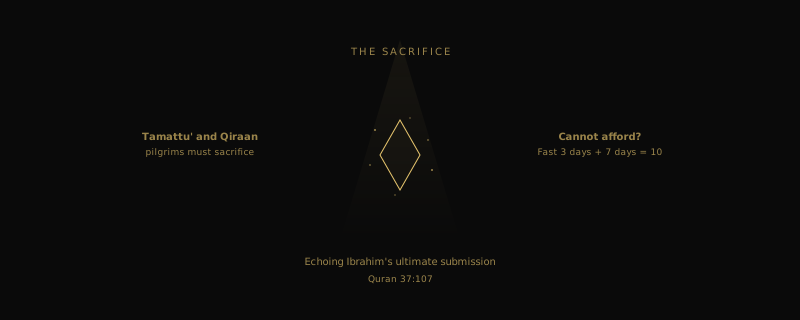
After pelting the Big Jamarah, the next act in the Sunnah order is the animal sacrifice (known as Hady in the context of Hajj). This sacrifice is an act of worship that honours the legacy of Ibrahim (AS), who was prepared to sacrifice his son in absolute submission to Allah’s will. Allah ransomed Ismail with a ram from Paradise, and the sacrifice of animals during Hajj continues this tradition of devotion.
“And the camels and cattle We have appointed for you as among the symbols of Allah; for you therein is good. So mention the name of Allah upon them when lined up [for sacrifice]; and when they are [lifeless] on their sides, then eat from them and feed the needy and the beggar.”
Quran 22:36| Type of Hajj | Sacrifice Required? |
|---|---|
| Tamattu’ (Umrah then Hajj separately) | Obligatory (Wajib) |
| Qiraan (Umrah and Hajj combined in one Ihram) | Obligatory (Wajib) |
| Ifraad (Hajj only, no Umrah) | Recommended (Mustahabb), not obligatory |
The animal must be free from defects that diminish its value. The Prophet (SAW) specified four defects that make an animal unacceptable:
Al-Bara’ ibn Azib (RA) reported that the Messenger of Allah (SAW) was asked what should be avoided in sacrificial animals. He gestured with his hand and said: “Four: a lame animal whose limp is obvious, a one-eyed animal whose defect is obvious, a sick animal whose sickness is obvious, and an emaciated animal that has no marrow in its bones.”
Tirmidhi 1497, Abu Dawud 2802, Nasai 4371In the modern Hajj, most pilgrims do not personally slaughter their animal. Instead, they arrange the sacrifice through one of the following channels:
Tip: You can authorize someone else (your tour operator, a representative, the sacrifice bank) to perform the sacrifice on your behalf. You do not need to be physically present at the slaughter. This is established from the Sunnah - the Prophet (SAW) himself delegated Ali (RA) to complete the remaining sacrifices on his behalf.
Jabir (RA) reported: “The Messenger of Allah (SAW) sacrificed sixty-three camels with his own hand. Then he gave (the remaining camels) to Ali (RA), who sacrificed them, and he (the Prophet SAW) shared him in his Hady (sacrifice).”
Sahih Muslim 1218If you are performing Tamattu’ or Qiraan Hajj and genuinely cannot afford to purchase a sacrificial animal, Allah has provided an alternative:
“And whoever cannot find [an animal for sacrifice] - then a fast of three days during Hajj and of seven when you have returned [home]. Those are ten complete [days].”
Quran 2:196The three days during Hajj should ideally be fasted before the Day of Arafah (i.e., the 6th, 7th, and 8th of Dhul Hijjah), though some scholars permit fasting on the 11th, 12th, and 13th. The seven days are fasted after you return home.
Fiqh Note: The Hanbali position is that the three days can be fasted on the Days of Tashriq (11th–13th) if the pilgrim did not fast them earlier. This is based on the report of Aisha and Ibn Umar (RA): “Fasting on the Days of Tashriq was not permitted except for one who could not find a sacrifice.” (Sahih Bukhari 1997). The Hanafi and Maliki schools prefer fasting before the 10th.
After the sacrifice (or after pelting if your sacrifice has been arranged separately and you are not waiting for confirmation), the next step is to shave or cut your hair. This act symbolizes humility, submission, and the shedding of vanity before Allah.
Shaving the entire head (Halq) is strongly preferred and superior to merely trimming. The Prophet (SAW) made this distinction clear with striking emphasis:
The Prophet (SAW) said: “O Allah, have mercy on those who shave their heads.” The Companions said: “And those who cut their hair, O Messenger of Allah?” He said: “O Allah, have mercy on those who shave their heads.” They said: “And those who cut their hair, O Messenger of Allah?” He said: “O Allah, have mercy on those who shave their heads.” They said: “And those who cut their hair?” He said: “And those who cut their hair.”
Sahih Bukhari 1727, Sahih Muslim 1301Three times the Prophet (SAW) made dua for those who shave before finally including those who trim. This is a powerful encouragement. If you are a man, shave your head completely. It is an act of complete surrender. You will not get this opportunity again easily. Surrender your vanity to Allah.
If you choose to trim (Taqseer) instead of shaving, you must cut hair from the entire head, not just a small portion. Cutting a few strands is not sufficient per the majority of scholars.
Women cut approximately a fingertip’s length (about 1–2 cm) from the ends of their hair. Women must never shave their heads - this is prohibited for women in Islam. Cutting a small amount from the tips is sufficient.
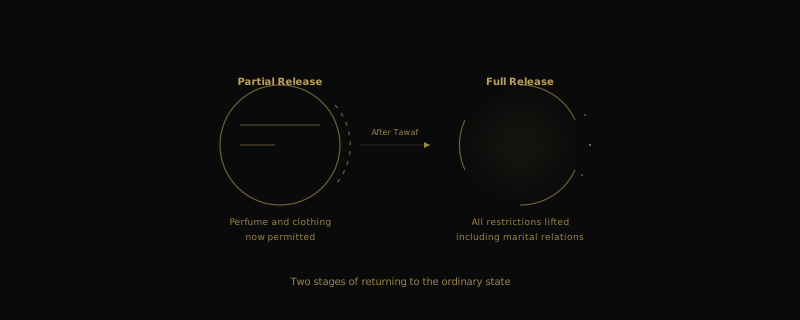
Once you have shaved or trimmed your hair, you enter the state of partial release from Ihram, known as at-Tahallul al-Awwal (the first release). At this point:
After shaving or cutting your hair, everything that was forbidden during Ihram becomes permissible EXCEPT marital intimacy. You may now:
Marital relations remain prohibited until after Tawaf al-Ifadah.
Aisha (RA) reported: “I used to apply perfume to the Messenger of Allah (SAW) for his Ihram before he entered Ihram, and for his exiting Ihram before he performed Tawaf of the Ka’bah.” (Sahih Bukhari 1539, Sahih Muslim 1189). This confirms the permissibility of perfume after the partial release.
Tawaf al-Ifadah - also called Tawaf al-Ziyarah (Tawaf of Visitation) - is one of the pillars (arkan) of Hajj. It is absolutely obligatory. Without it, your Hajj is incomplete and invalid. There is no substitute for it and no penalty that can replace it. It must be performed.
“Then let them end their untidiness and fulfil their vows and perform Tawaf around the Ancient House.”
Quran 22:29This verse refers specifically to Tawaf al-Ifadah. The scholars of tafsir, including Ibn Kathir, confirm that “Tawaf around the Ancient House” here means the Tawaf that is a pillar of Hajj.
| Type of Hajj | Sa’ee Required After Tawaf al-Ifadah? |
|---|---|
| Tamattu’ | Yes - This is your Hajj Sa’ee (separate from your Umrah Sa’ee) |
| Qiraan | Only if you did not already perform Sa’ee after Tawaf al-Qudum |
| Ifraad | Only if you did not already perform Sa’ee after Tawaf al-Qudum |
If you are performing Tamattu’ Hajj (which most pilgrims are), you must perform Sa’ee between Safa and Marwah after this Tawaf. This is your Hajj Sa’ee, entirely separate from the Sa’ee you performed during your Umrah.
Fiqh Note: The earliest time for Tawaf al-Ifadah is after midnight on the night before the 10th (Shafi’i), or after Fajr on the 10th (Hanafi, Hanbali). As for the latest time:
Tip: Tawaf al-Ifadah on the 10th can be extremely crowded. It is perfectly valid - and often wiser - to delay it to the 11th or 12th. Some scholars even permit combining Tawaf al-Ifadah with the Farewell Tawaf (performing one Tawaf with two intentions) if you delay it until you are ready to leave Makkah. This is the position of some Hanbali scholars and was the fatwa of Shaykh Ibn Uthaymeen (may Allah have mercy on him).
After completing Tawaf al-Ifadah (and Sa’ee, if required), you achieve the second and final release from Ihram - at-Tahallul ath-Thani. At this point:
ALL restrictions of Ihram are now completely lifted. Everything is permissible, including marital relations. Your Ihram is fully over.
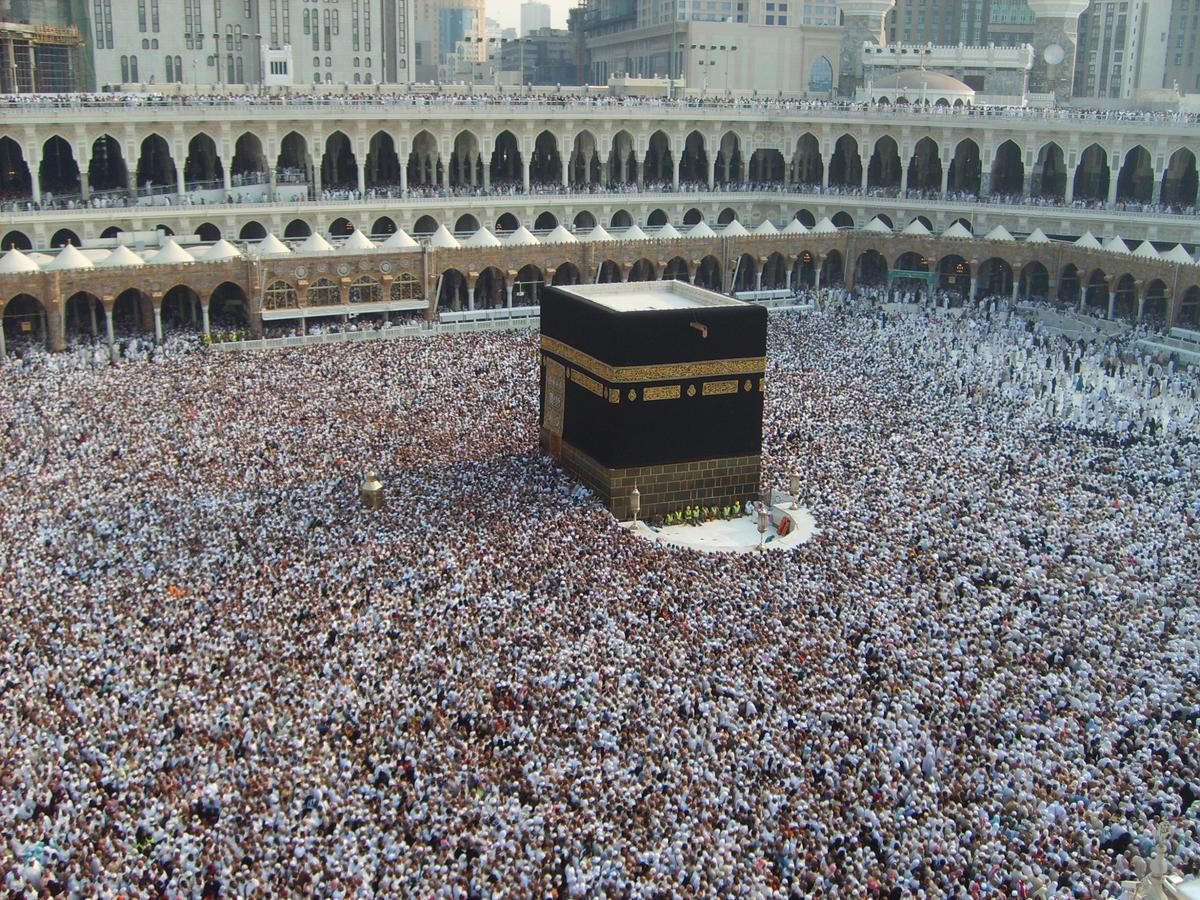
Reflect You have shed your Ihram for the last time. You are reborn. The Prophet (SAW) promised: “Whoever performs Hajj for the sake of Allah and does not utter any obscene speech or do any evil deed, will go back (free of sin) as his mother bore him.” (Sahih Bukhari 1521). Right now, your slate is clean. Every sin erased. Every transgression forgiven. Years and decades of accumulated burden - lifted. The question that remains is not about the past. It is about the future. What will you write on this blank page? What kind of person will you choose to be from this moment forward? The old you died in Ihram. A new you stands here now. Do not waste this second chance.

After completing Tawaf al-Ifadah (and Sa’ee if applicable), you return to Mina to spend the nights of the Days of Tashriq. The remaining days of Hajj are centred in Mina, where you will stay in your tent, worship, rest, and perform the daily pelting of all three Jamarat.
If you performed Tawaf al-Ifadah on the 10th, you will return to Mina on the evening of the 10th. If you delayed it, you may go to the Haram on the 11th or 12th and return to Mina afterward. Either way, your base for the next two or three days is Mina.
Tip: Use the time in Mina wisely. The tent can feel monotonous after the intensity of Arafah and the 10th, but these are blessed days. Read Quran, make dhikr, rest your body, and prepare spiritually for the farewell. Do not waste these days in idle conversation or on your phone.
The Days of Tashriq are the 11th, 12th, and 13th of Dhul Hijjah. They are called “Tashriq” because the early Arabs would dry (tashreeq) the sacrificial meat in the sun during these days to preserve it. These are sacred days of worship, gratitude, and remembrance.
The Prophet (SAW) said: “The Days of Tashriq are days of eating, drinking, and remembrance of Allah.”
Sahih Muslim 1141“And remember Allah during the appointed days.”
Quran 2:203The “appointed days” in this verse refer to the Days of Tashriq. Fill these days with Takbir, Tahlil, Tahmid, and Tasbeeh. Umar (RA) would recite the Takbir in his tent at Mina, and the people in the market would hear him and begin reciting it too, until all of Mina would reverberate with the Takbir (Sahih Bukhari, commentary on 2:203).
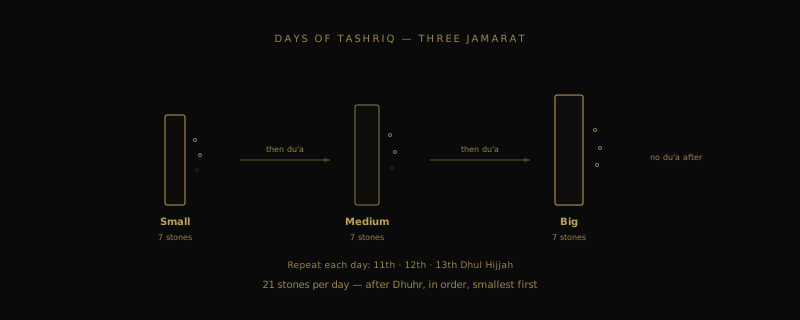
Unlike the 10th (when you pelted only the Big Jamarah), on each of the Days of Tashriq you pelt all three Jamarat in order:
| Order | Jamarah | Pebbles | Dua After? |
|---|---|---|---|
| 1st | Small Jamarah (al-Ula / al-Sughra) | 7 pebbles | Yes - Long dua facing Qiblah |
| 2nd | Medium Jamarah (al-Wusta) | 7 pebbles | Yes - Long dua facing Qiblah |
| 3rd | Big Jamarah (al-Aqabah) | 7 pebbles | No - Leave immediately |
That is 21 pebbles per day (7 × 3). Over the two or three days of Tashriq, you will need 42 pebbles (if leaving on the 12th) or 63 pebbles (if staying for the 13th), in addition to the 7 you used on the 10th. Total: either 49 or 70 pebbles for the entire Hajj.
The Prophet (SAW) pelted the Jamarat on the Days of Tashriq after Zuhr (midday):
Jabir (RA) said: “The Messenger of Allah (SAW) pelted the Jamarah on the Day of Sacrifice (10th) in the morning, and on the days after that (11th, 12th, 13th) after the sun had passed its zenith (Zuhr).”
Sahih Bukhari 1746, Sahih Muslim 1299Fiqh Note: The timing of pelting on the Days of Tashriq differs among the madhabs:
If you follow the Hanafi or Maliki school, you may pelt in the morning. Otherwise, wait until after Zuhr.
1. The Small Jamarah (al-Ula): This is the first Jamarah you encounter when walking from your tent in Mina toward the Jamarat bridge. Stand at a suitable distance, throw 7 pebbles one at a time, saying “Allahu Akbar” with each throw. After completing the 7 throws, move forward and to the right, away from the flow of people. Face the Qiblah, raise your hands, and make extended dua. The Prophet (SAW) stood for a long time in this spot, supplicating to Allah.
Ibn Umar (RA) reported that the Prophet (SAW) would pelt the Jamarah closest to Mina (the small one) with seven small pebbles, saying “Allahu Akbar” with each one, then move forward until he reached a level area where he would stand facing the Qiblah, raising his hands and making dua. He would stand for a long time.
Sahih Bukhari 1751, 17532. The Medium Jamarah (al-Wusta): Proceed to the second Jamarah. Again, throw 7 pebbles one at a time, saying “Allahu Akbar” with each throw. After completing the throws, move to the side, face the Qiblah, raise your hands, and make extended dua. The Prophet (SAW) stood for a long time here as well.
3. The Big Jamarah (al-Aqabah): Proceed to the third and final Jamarah. Throw 7 pebbles one at a time, saying “Allahu Akbar” with each throw. After the last pebble, leave immediately. Do NOT stand for dua after the Big Jamarah. This is the consistent Sunnah - the Prophet (SAW) did not stop at the Big Jamarah for dua on any day.
Tip: The duas after the Small and Medium Jamarat are a neglected Sunnah. Most pilgrims rush through all three Jamarat without stopping. Yet the Prophet (SAW) “stood for a long time” making dua at each of the first two. Take advantage of this blessed station. These are moments of accepted dua that most people miss.
Allah has given pilgrims the choice of departing Mina after two days or staying for the third:
“Then whoever hastens [departure] in two days, there is no sin upon him; and whoever delays [until the third], there is no sin upon him - for the one who fears Allah.”
Quran 2:203The practical implications of this verse are:
Fiqh Note: Abu Hanifah (may Allah have mercy on him) held that the deadline for departure is Fajr of the 13th, not sunset of the 12th. According to the Hanafi school, as long as you leave before Fajr of the 13th, you are not required to stay for the 13th day’s pelting. The majority (Maliki, Shafi’i, Hanbali) hold that sunset of the 12th is the deadline.
Tip: Staying for the 13th is better and more rewarding. The scholars note that the verse ends with “for the one who fears Allah”, which many mufassirun (including Ibn Kathir) interpret as encouraging staying for all three days. If you have the ability and your group accommodates it, stay the extra day. However, leaving on the 12th is fully permissible and carries no sin.
During the Days of Tashriq, pilgrims are expected to spend the nights at Mina. Specifically, you should spend the majority of each night (from Maghrib to Fajr) in Mina.
Fiqh Note: The ruling on spending the nights at Mina varies by madhab:
The evidence that it is normally required comes from the hadith of Abbas (RA):
Abbas (RA) sought permission from the Prophet (SAW) to spend the nights of Mina in Makkah because of his duty of providing water (siqayah) to the pilgrims, and the Prophet (SAW) granted him permission.
Sahih Bukhari 1745The fact that Abbas (RA) needed to seek special permission indicates that staying overnight in Mina is the default requirement - otherwise, there would have been no need to ask.
After completing all the rites at Mina - the pelting, the nights of Tashriq, and everything that the days of Hajj required of you - there is one final act before you leave Makkah. It is the Farewell Tawaf (Tawaf al-Wada’), and it is the last thing you do in Makkah. Your final footsteps in the Holy City must be in Tawaf around the House of Allah.
Ibn Abbas (RA) said: “The people were ordered to make the Tawaf of the Ka’bah as the last thing they do before leaving, except that menstruating women were excused.”
Sahih Bukhari 1755The Prophet (SAW) said: “None of you should leave until the last thing he does is Tawaf around the House.”
Sahih Muslim 1327Fiqh Note: The ruling on Tawaf al-Wada’ differs among the madhabs:
The majority position (three of the four madhabs) is that it is wajib. Do not skip it.
Fiqh Note: Women who are menstruating or experiencing postnatal bleeding (nifas) at the time of departure are completely excused from the Farewell Tawaf. This is the consensus (ijma’) of the scholars, based on the explicit hadith of Ibn Abbas (RA) in Sahih Bukhari 1755. No penalty is required, and their Hajj is complete without it.
Fiqh Note: If you have not yet performed Tawaf al-Ifadah by the time you are ready to leave Makkah, you can combine it with the Farewell Tawaf. Perform one Tawaf with the intention of both Tawaf al-Ifadah and Tawaf al-Wada’. This single Tawaf will fulfil both obligations. This is the position of the Hanbali school and was the fatwa of multiple senior scholars.
Warning: After completing the Farewell Tawaf, leave Makkah promptly. Do not linger in the city for extended shopping, socializing, or tourism. The command is clear: the Tawaf must be the last thing you do. Brief, necessary stops - collecting your luggage, catching your bus, buying essential supplies for the journey - are permitted and do not invalidate the Farewell Tawaf. But if you remain in Makkah for an extended period after the Farewell Tawaf, many scholars say you must repeat it before departing.
Before leaving the Haram for the last time, many pilgrims go to the Multazam - the area of the Ka’bah wall between the Black Stone and the Ka’bah door. This is a place of extraordinary spiritual intensity, where duas are answered. The practice of pressing oneself against the Multazam and making dua is reported from the Companions:
Abdullah ibn Amr (RA) was seen pressing his chest, face, and hands against the Multazam and making dua.
Abu Dawud (reported by Abdullah ibn Amr)Press yourself against the Ka’bah if you can reach it. Place your chest, your cheek, your palms flat against the wall of the House that Ibrahim built. And pour your heart out. Ask Allah for everything. Ask for forgiveness for every sin you have ever committed. Ask for your parents, your children, your spouse. Ask for the Ummah. Ask for a good ending. Cry if the tears come. This may be the last time you ever stand this close to the House of Allah.
Your Hajj is now complete. Hajj Mabrur! May Allah accept it from you and grant you a Hajj that is pure, sincere, and accepted.
Reflect As you walk away from the Ka’bah for the last time, the weight of the moment may overwhelm you. Some scholars recommend walking away facing forward as a sign of trust and hope that Allah will bring you back. Others say to look back one final time and make one last dua. Either way, carry this moment in your heart forever. You came to Hajj as one person. You are leaving as another. The Prophet (SAW) promised that you are leaving as pure as the day your mother gave birth to you. Every sin, wiped clean. Every burden, lifted. Every debt to Allah, settled. Now the real Hajj begins - the Hajj of the rest of your life. The five days in Makkah were the training ground. The decades ahead are the test. Will you honour what Allah gave you here? Will the person who returns home be better than the one who left? That is the question only you can answer.

The rites are complete. The Ihram has been removed. The final Tawaf has been performed. But the true measure of your Hajj is not what happened in Makkah - it is what happens when you go home. The scholars have always said that the real test of an accepted Hajj is the life that follows it.
The early scholars and righteous predecessors identified several signs that a person’s Hajj has been accepted by Allah:
Hasan al-Basri (may Allah have mercy on him) was asked: “What is the Hajj Mabrur?” He said: “That you return renouncing this world and desiring the Hereafter.”
When pilgrims return from Hajj, those who greet them should make dua for them. The Prophet (SAW) taught a specific supplication for greeting returning pilgrims:
قَبِلَ اللَّهُ حَجَّكَ، وَغَفَرَ ذَنْبَكَ، وَأَخْلَفَ نَفَقَتَكَ
Qabila Allahu Hajjak, wa ghafara dhanbak, wa akhlafa nafaqatak
“May Allah accept your Hajj, forgive your sins, and replace your expenses.”
This dua is reported from the practice of the Salaf and is recommended when welcoming someone who has returned from the pilgrimage.
As you travel home from Hajj, recite the dua for returning from a journey that the Prophet (SAW) would recite:
آيِبُونَ تَائِبُونَ عَابِدُونَ لِرَبِّنَا حَامِدُونَ
Ayibuna, ta’ibuna, ‘abiduna, li Rabbina hamidun
“Returning, repenting, worshipping, and to our Lord praising.”
Sahih Muslim 1342Tip: The spiritual high of Hajj is real, but it fades if you do not actively protect it. Here is how to maintain your transformation:
The Prophet (SAW) said:
“Follow up a bad deed with a good deed and it will erase it, and treat people with good character.”
Tirmidhi 1987You are returning home as a newborn, but the world you are returning to has not changed. The same temptations, the same pressures, the same people and environments that led you to sin before Hajj are still there. The difference is you. You are different now. You have stood at Arafah and wept. You have thrown stones at the Shaytan. You have walked around the House of Allah. You have been cleansed. Do not go back to the person you were before. Be different. Be better. That is the Hajj that lasts.

Test your knowledge of pelting, sacrifice, and the Days of Tashriq.
Take the Hajj Essentials Quiz →Saudi Arabia's Ministry of Hajj and Umrah will host the sixth Hajj Conference and Exhibition in Jeddah from November 8 t...
Saudi Arabia's Ministry of Hajj and Umrah has launched Direct Umrah, letting pilgrims book Umrah packages online through...
Saudi air defenses intercepted a Houthi drone south of Makkah on September 15, prompting a rare security alert in the ho...
The US State Department has urged citizens to reconsider travel to Saudi Arabia after a rise in missile and drone attack...