Bangladesh sets September 24 deadline for Hajj 2027 registration
Bangladesh has set September 24, 2026, as the final, non-extendable deadline for Hajj 2027 registration, with a national...
The story of Ibrahim (AS), Hajra, Ismail (AS), and how Allah established the rites of Hajj
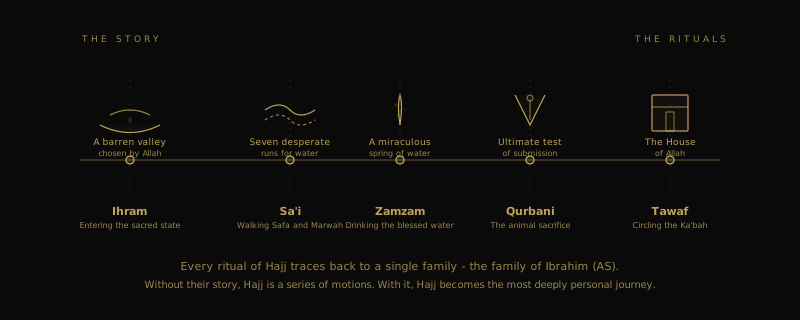
Before we learn a single ritual of Hajj, we must first understand the story behind it. Every act of Hajj - every circuit around the Ka'bah, every walk between Safa and Marwah, every stone thrown at the Jamarat, every animal sacrificed - traces back to a single family: the family of Ibrahim (AS). Without knowing their story, Hajj is a series of motions. With it, Hajj becomes one of the most deeply personal spiritual journeys a human being can undertake.
The rites of Hajj are not arbitrary. They are re-enactments. When you run between Safa and Marwah, you walk in the footsteps of a desperate mother. When you sacrifice an animal, you recall a father's willingness to give up what he loved most. When you throw stones at the Jamarat, you reject the same whispers of Shaytan that once tried to turn Ibrahim away from his Lord. When you circle the Ka'bah, you orbit the very House that Ibrahim and his son built with their own hands, stone by stone, dua by dua.
Allah Himself commanded that this pilgrimage be proclaimed to all of humanity:
وَأَذِّن فِي النَّاسِ بِالْحَجِّ يَأْتُوكَ رِجَالًا وَعَلَىٰ كُلِّ ضَامِرٍ يَأْتِينَ مِن كُلِّ فَجٍّ عَمِيقٍ
"And proclaim to the people the Hajj; they will come to you on foot and on every lean camel; they will come from every distant pass."
Surah Al-Hajj, 22:27That call was made thousands of years ago. And every year, millions answer it. You are about to become one of them. But first, let us go back - back to where it all began.
To understand Hajj, we must first understand the man at its centre. Ibrahim (AS) is not merely a Prophet - he holds a station that no other human being besides the Prophet Muhammad (SAW) has been given. Allah called him Khalilullah - the intimate Friend of Allah:
وَاتَّخَذَ اللَّهُ إِبْرَاهِيمَ خَلِيلًا
"And Allah took Ibrahim as a Khalil (an intimate friend)."
Surah An-Nisa, 4:125The word Khalil in Arabic carries a meaning deeper than friendship. It comes from the root khulla, which means a love that has permeated every fibre of one's being. Imam Ibn al-Qayyim (rahimahullah) explained in his masterwork Ighathat al-Lahfan that khulla is the highest degree of love - a love so complete that it leaves no space in the heart for anything other than the beloved. This is the station Ibrahim (AS) reached with his Lord.
But this station was not given freely. It was earned through a lifetime of trials that would have broken lesser men.
Ibrahim (AS) grew up in a society that worshipped idols. His own father, Azar, was an idol-maker. Yet from a young age, Ibrahim's fitrah (natural disposition) rejected the worship of anything other than Allah. The Quran records his famous logical reasoning: he looked at a star and said "This is my Lord," but when it set, he said, "I do not love those that set." He did the same with the moon and the sun, each time arriving at the same conclusion - these created things could not be God. He then declared his submission to the Creator of the heavens and the earth (Quran 6:76-79).
His rejection of idolatry was not merely intellectual - it was active. When his people left for a festival, Ibrahim took an axe and smashed every idol in their temple, leaving only the largest one intact. When they returned in fury, he said:
"Rather, this - the largest of them - did it, so ask them, if they should speak."
Surah Al-Anbiya, 21:63He exposed the absurdity of worshipping objects that could neither help themselves nor speak. His people were enraged. They could not answer his argument, so they resorted to violence.
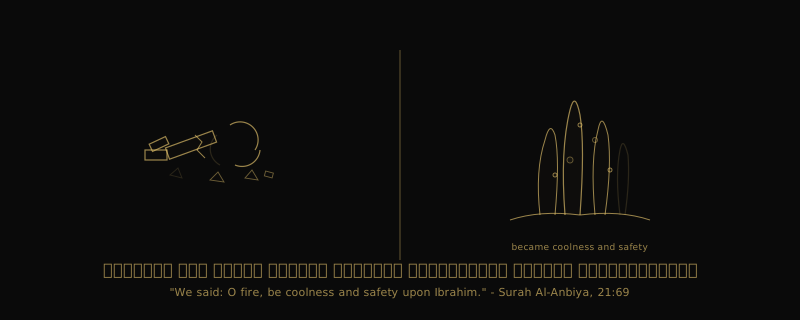
They built a massive fire - so large, according to narrations cited by Ibn Kathir in Al-Bidayah wan-Nihayah, that they could not approach it themselves and had to use a catapult to throw Ibrahim into it. As he was hurled towards the flames, Jibreel (AS) came to him and asked, "Do you need anything?" Ibrahim replied: "From you? No. From Allah? Yes." He then said the words:
حَسْبُنَا اللَّهُ وَنِعْمَ الْوَكِيلُ
Hasbunallahu wa ni'mal wakeel
"Allah is sufficient for us, and He is the best Disposer of affairs."
These are the same words the Prophet Muhammad (SAW) and his Companions said when they were told that a great army had gathered against them (Quran 3:173). Ibn Abbas (RA) narrated: "This was said by Ibrahim when he was thrown into the fire, and it was said by Muhammad (SAW) when they said, 'The people have gathered against you, so fear them.'" (Sahih al-Bukhari 4563).
And then Allah commanded:
قُلْنَا يَا نَارُ كُونِي بَرْدًا وَسَلَامًا عَلَىٰ إِبْرَاهِيمَ
"We said, 'O fire, be coolness and safety upon Ibrahim.'"
Surah Al-Anbiya, 21:69The fire obeyed its Lord. It did not burn Ibrahim. He walked out unscathed.
Ibrahim's courage was not reserved for idols of stone. He stood before the most powerful ruler of his time - Nimrod - and debated him about the existence of God:
"Have you not considered the one who argued with Ibrahim about his Lord [merely] because Allah had given him kingship? When Ibrahim said, 'My Lord is the one who gives life and causes death,' he said, 'I give life and cause death.' Ibrahim said, 'Indeed, Allah brings up the sun from the east, so bring it up from the west.' So the disbeliever was overwhelmed, and Allah does not guide the wrongdoing people."
Surah Al-Baqarah, 2:258Ibrahim (AS) is the father of the Prophets. Through his son Ishaq (AS), the line of Prophethood continued through Ya'qub (AS), Yusuf (AS), Musa (AS), Dawud (AS), Sulayman (AS), and 'Isa (AS). Through his son Ismail (AS), the final and greatest Prophet was born - Muhammad (SAW). Every Prophet who came after Ibrahim descended from him. Allah says:
"And We gave him Ishaq and Ya'qub; all [of them] We guided. And Nuh We guided before; and among his descendants, Dawud and Sulayman and Ayyub and Yusuf and Musa and Harun... And Zakariyya and Yahya and 'Isa and Ilyas..."
Surah Al-An'am, 6:84-85This is the man whose footsteps you will walk in during Hajj. A man who was thrown into fire and did not waver. A man who debated tyrants and did not flinch. A man who was asked to sacrifice his own son and submitted without hesitation. Khalilullah - the Friend of God.
Ibrahim's entire life was a demonstration of one principle: absolute trust in Allah, regardless of the cost. He was abandoned by his family, rejected by his people, thrown into a fire, separated from his wife and child, and asked to slaughter his own son. At every turn, his response was the same: submission. This is the meaning of the word "Islam" itself. And this is the spirit we are asked to embody when we walk in his footsteps during Hajj. Ask yourself: what is my fire? What is the thing I am most afraid to surrender? Ibrahim teaches us that when you give it up for Allah, what you receive in return is beyond anything you could have imagined.
Years passed after Ibrahim's miraculous survival from the fire. He married Hajra (also known as Hajar) and was blessed with a son, Ismail (AS), after decades of longing for a child. But no sooner had this blessing arrived than Allah tested Ibrahim with one of the most heart-wrenching commands a father could receive.
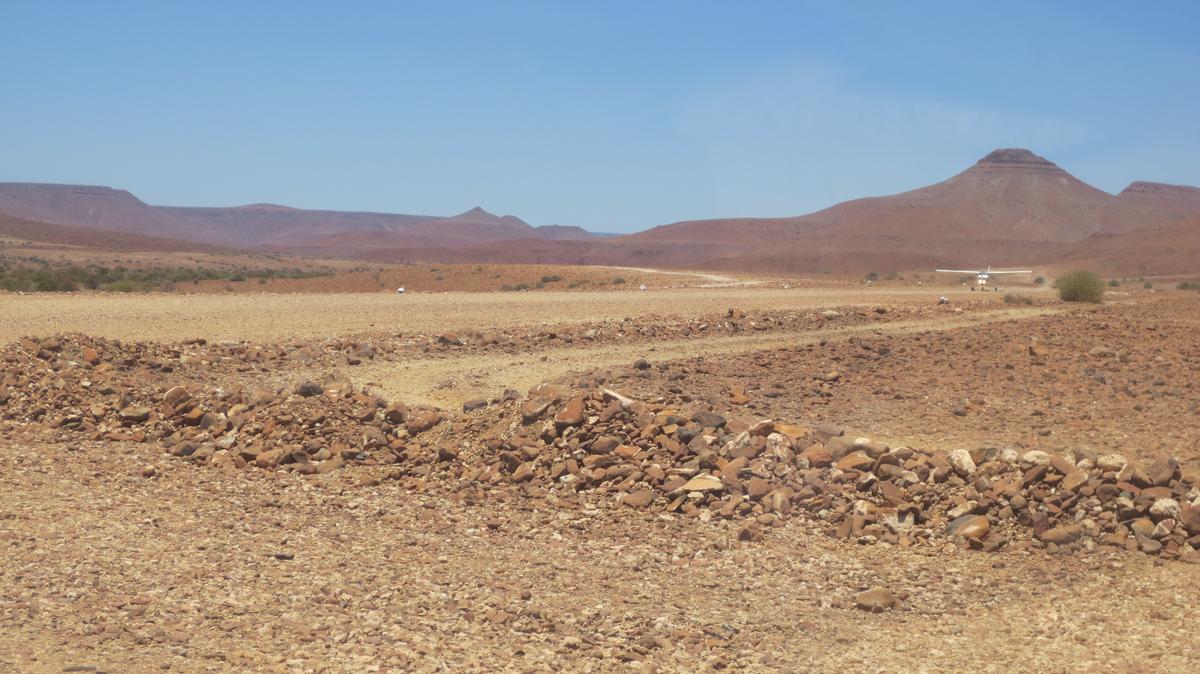
Allah commanded Ibrahim (AS) to take his wife Hajra and their infant son Ismail (AS) on a journey. Not to a city. Not to a place of comfort. To a barren, uncultivated valley in the Arabian desert - a place with no water, no vegetation, no people, and no shelter. The place that would one day become Makkah.
The great hadith scholar Ibn Abbas (RA) narrated the entire story in a lengthy, famous narration preserved in Sahih al-Bukhari. Let us follow it closely:
Ibn Abbas (RA) narrated:
Ibrahim brought [Hajra], the mother of Ismail, and her son Ismail while she was suckling him, to a place near the Ka'bah under a tree on the spot of Zamzam, at the highest place in the mosque. During those days there was nobody in Makkah, nor was there any water. So he made them sit over there and placed near them a leather bag containing some dates, and a small water-skin containing some water, and set out homeward.
Sahih al-Bukhari 3364Imagine this scene. A father, leaving his wife and nursing infant in the middle of nowhere. No house to shelter in. No neighbours to call upon. No market to buy food from. Just a bag of dates, a skin of water, and the burning desert sun.
Hajra followed him. She called out to him as he walked away:
"O Ibrahim! Where are you going, leaving us in this valley where there is no person whose company we may enjoy, nor is there anything [to sustain us]?"
She repeated that to him many times, but he did not look back at her.
Then she asked him: "Has Allah ordered you to do so?"
He said: "Yes."
She said: "Then He will not neglect us."
Sahih al-Bukhari 3364She asked the question multiple times. He did not look back - not because he did not care, but because if he turned around, he might not have been able to continue. This was not easy for Ibrahim. He was a father leaving his family in a desert. But he had received a command from Allah, and for Khalilullah, that was enough.
And then Hajra's response. Pay close attention to it, because this is one of the most extraordinary moments in all of human history. She did not say, "Then I hope He will not neglect us." She did not say, "Then maybe He will help us." She said, with absolute certainty:
"Then He will not neglect us."
No doubt. No hesitation. No conditions. Pure, unshakeable tawakkul - reliance upon Allah. And she was right. Allah did not neglect them. He never does.
Then Ibrahim walked a little further until he was hidden from them. He then faced the direction of the Ka'bah [its future site] and raised his hands, invoking Allah with the following supplication:
Sahih al-Bukhari 3364Hajra's response is one of the most powerful examples of tawakkul in all of Islamic history. She did not simply accept her situation - she affirmed it. "Then He will not neglect us." She transformed a moment of apparent abandonment into a declaration of faith. Think about the times in your own life when you felt abandoned by circumstance - when things did not make sense, when the path ahead seemed barren and empty. Can you say, with Hajra's certainty, "He will not neglect us"? Hajj will ask this of you. The heat, the crowds, the exhaustion - all of it is an invitation to trust as Hajra trusted.
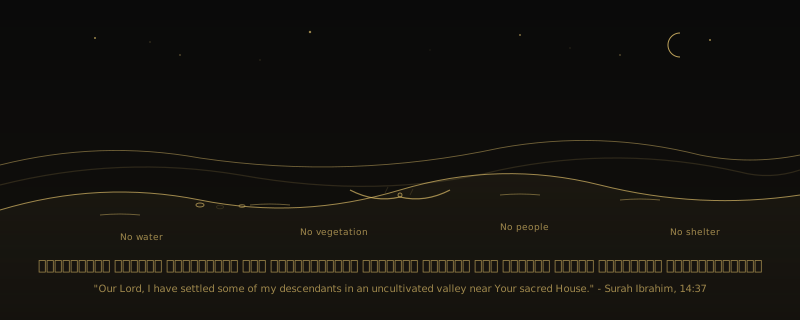
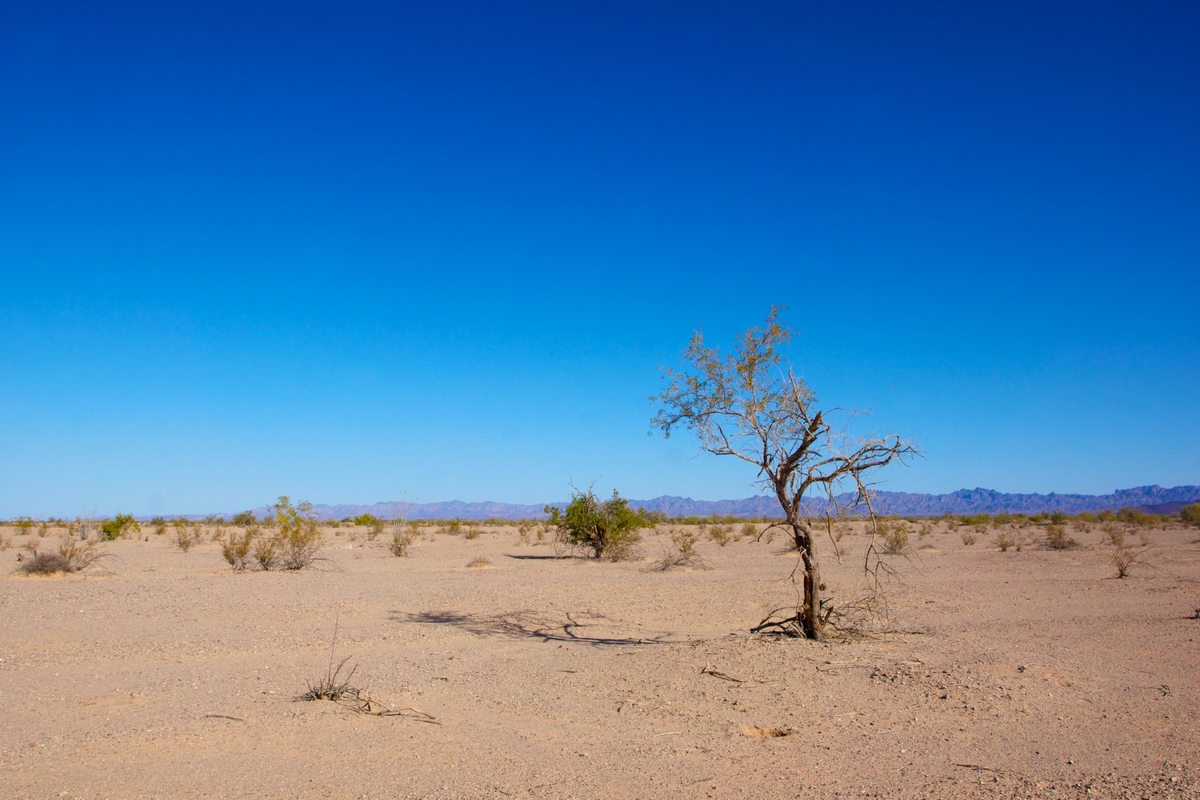
After leaving Hajra and Ismail, once Ibrahim had walked far enough that they could no longer see him, he turned towards the place where the Ka'bah would one day stand, raised his hands, and made one of the most beautiful and far-reaching supplications recorded in the Quran:
رَّبَّنَا إِنِّي أَسْكَنتُ مِن ذُرِّيَّتِي بِوَادٍ غَيْرِ ذِي زَرْعٍ عِندَ بَيْتِكَ الْمُحَرَّمِ رَبَّنَا لِيُقِيمُوا الصَّلَاةَ فَاجْعَلْ أَفْئِدَةً مِّنَ النَّاسِ تَهْوِي إِلَيْهِمْ وَارْزُقْهُم مِّنَ الثَّمَرَاتِ لَعَلَّهُمْ يَشْكُرُونَ
Rabbana innee askantu min dhurriyyatee biwadin ghayri dhee zar'in 'inda baytikal-muharram. Rabbana liyuqeemu as-salata faj'al af'idatan minan-naasi tahwee ilayhim warzuqhum minat-thamaraati la'allahum yashkuroon.
"O our Lord! I have made some of my offspring to dwell in an uncultivated valley by Your Sacred House, in order, O our Lord, that they may establish prayer. So make hearts among the people incline toward them, and provide them with fruits so that they may be grateful."
Surah Ibrahim, 14:37
Study this dua carefully. Ibrahim did not ask Allah for wealth, for comfort, or for worldly success for his family. His first and primary concern was that they establish prayer - liyuqeemu as-salah. Everything else - the love of people, the provision of sustenance - was secondary. This tells us everything about Ibrahim's priorities: worship first, everything else follows.
And look at how Allah answered this dua. Ibrahim asked that hearts incline towards this barren valley. Today, Makkah is the most beloved place on earth to over two billion Muslims. Millions weep with longing just to see the Ka'bah. People save their entire lives for a chance to visit. Hearts have been inclining towards this place for over four thousand years. The dua of Ibrahim is still being answered, every single day.
Ibrahim continued his supplication. He prayed for himself and his descendants:
رَبِّ اجْعَلْنِي مُقِيمَ الصَّلَاةِ وَمِن ذُرِّيَّتِي ۚ رَبَّنَا وَتَقَبَّلْ دُعَاءِ
Rabbij'alnee muqeemas-salati wa min dhurriyyatee, Rabbana wa taqabbal du'a.
"O my Lord! Make me one who establishes prayer, and [also] from my offspring. Our Lord, and accept my supplication."
Surah Ibrahim, 14:40
Even Ibrahim - Khalilullah, the Friend of Allah, the one who survived fire, the father of Prophets - prayed to Allah to make him one who establishes prayer. He did not take his own worship for granted. If Ibrahim asked Allah for help with his salah, how much more do we need to?
And in another supplication, Ibrahim asked for something even broader:
رَبِّ اجْعَلْ هَٰذَا الْبَلَدَ آمِنًا وَاجْنُبْنِي وَبَنِيَّ أَن نَّعْبُدَ الْأَصْنَامَ
"My Lord, make this city [Makkah] secure and keep me and my sons away from worshipping idols."
Surah Ibrahim, 14:35And in Surah Al-Baqarah:
وَإِذْ قَالَ إِبْرَاهِيمُ رَبِّ اجْعَلْ هَٰذَا بَلَدًا آمِنًا وَارْزُقْ أَهْلَهُ مِنَ الثَّمَرَاتِ
"And [mention] when Ibrahim said, 'My Lord, make this a secure city and provide its people with fruits - whoever of them believes in Allah and the Last Day.'"
Surah Al-Baqarah, 2:126Allah answered every single one of these supplications. Makkah became secure - it was designated as a Haram (sanctuary) where no blood may be shed and no tree may be uprooted. It was provided with fruits and sustenance despite being in the middle of a desert. And hearts have never stopped inclining towards it.
Ibrahim's duas teach us what to prioritise when we ask Allah. He did not begin by asking for comfort - he began by asking for prayer. He did not ask for fame - he asked for sincerity. He did not ask to be kept from poverty - he asked to be kept from shirk. When you stand in Arafat during Hajj and raise your hands, what will you ask for? Let Ibrahim's example re-order your priorities. The greatest gift you can ask for is not wealth or health - it is to be kept firm upon Tawheed, to establish your prayer, and to have your worship accepted.
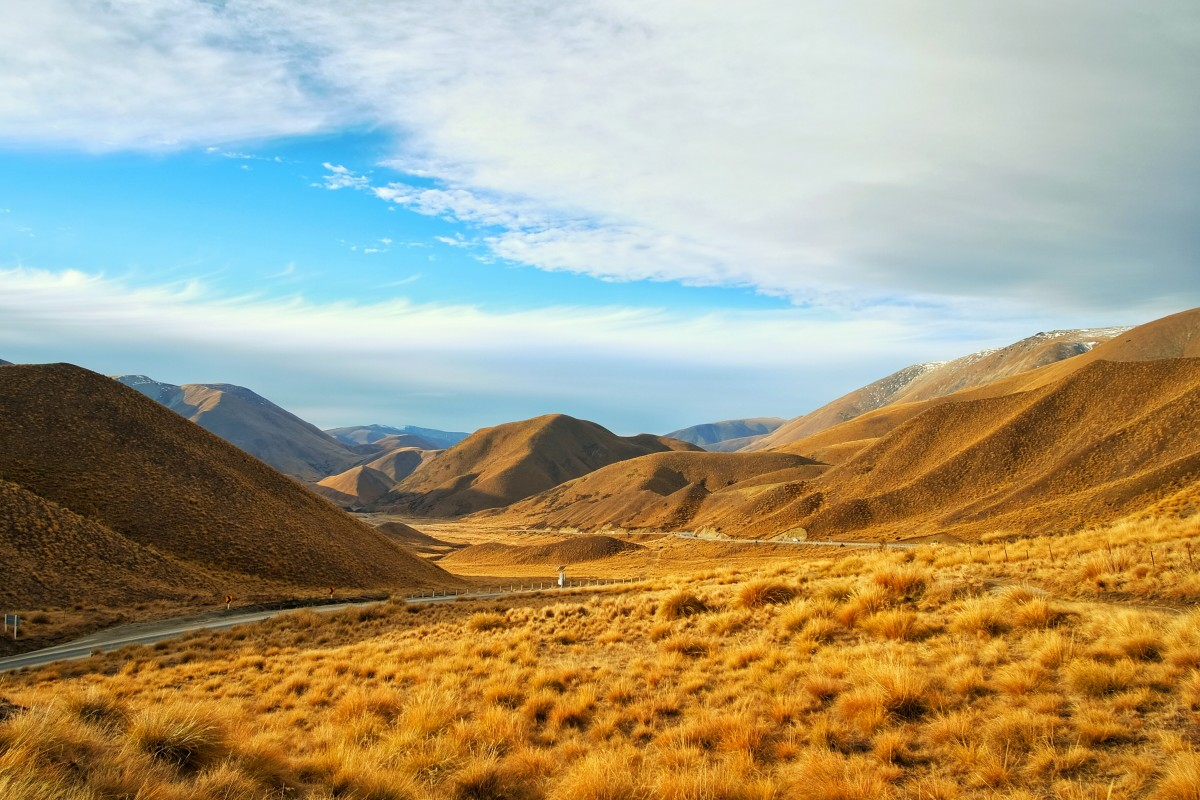
Now we return to Hajra and baby Ismail, alone in the desert. The continuation of the narration of Ibn Abbas (RA) in Sahih al-Bukhari gives us the full, vivid account of what happened next:
Ismail's mother went on suckling Ismail and drinking from the water she had. When the water in the water-skin had all been used up, she became thirsty and her child also became thirsty. She started looking at him [Ismail] tossing in agony.
Sahih al-Bukhari 3364Picture this. A mother watching her baby writhe with thirst. No phone to call for help. No road to follow. No one for miles. The dates are gone. The water is gone. The baby is dying. What does she do?
She gets up and runs.
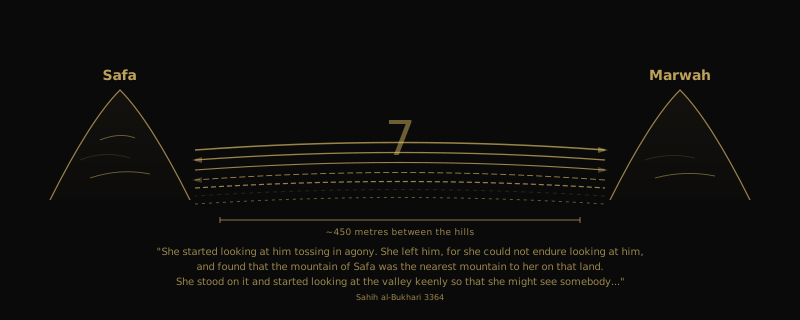
She left him, for she could not endure looking at him, and found that the mountain of As-Safa was the nearest mountain to her on that land. She stood on it and started looking at the valley keenly so that she might see somebody, but she could not see anybody.
Then she descended from As-Safa and when she reached the valley, she tucked up her robe and ran in the valley like a person in distress and trouble, till she crossed the valley and reached Al-Marwah mountain where she stood and started looking, expecting to see somebody, but she could not see anybody.
Sahih al-Bukhari 3364She ran from Safa to Marwah. Then from Marwah back to Safa. Then Safa to Marwah again. Each time, climbing the hill, scanning the horizon desperately for any sign of help - a person, a caravan, anything. Each time, seeing nothing but empty desert.
The hadith describes that when she was in the valley between the two mountains - the low point where she could not see her baby - she ran. Not walked. Ran. She tucked her robe so she could sprint. A mother, alone, in a desert, running for her child's life.
She repeated that running between Safa and Marwah seven times.
The Prophet (SAW) said: "This is the source of the tradition of the Sa'ee - the going of people between Safa and Marwah."
Sahih al-Bukhari 3364Key Connection: The Sa'ee - the ritual walking between Safa and Marwah that every pilgrim performs during Hajj and Umrah - is a direct re-enactment of Hajra's desperate search for water. The distance between Safa and Marwah is approximately 450 metres. Seven trips total approximately 3.15 kilometres. To this day, there is a marked section in the middle (between the two green lights) where men are encouraged to jog - this is the valley where Hajra ran, the low point where she could not see baby Ismail and sprinted in her distress.
Hajra did not simply sit beside her dying baby and pray. She combined trust in Allah with action. She ran. Seven times. Between two mountains. With a dying child. This is the true Sunnah of tawakkul: you tie your camel AND trust Allah. The Prophet (SAW) said: "Tie your camel, then put your trust in Allah" (Sunan al-Tirmidhi 2517). Hajra is the living embodiment of this principle.
And consider this: a woman, alone in a desert, is the origin of one of Hajj's five pillars. Not a king. Not a general. Not a scholar. A mother. Every pilgrim - man or woman, rich or poor, king or commoner - walks in her footsteps. Allah honoured her effort so much that He made it an eternal act of worship. What does this tell you about how Allah views your struggles, your efforts, your exhausting runs between the "mountains" of your own life?
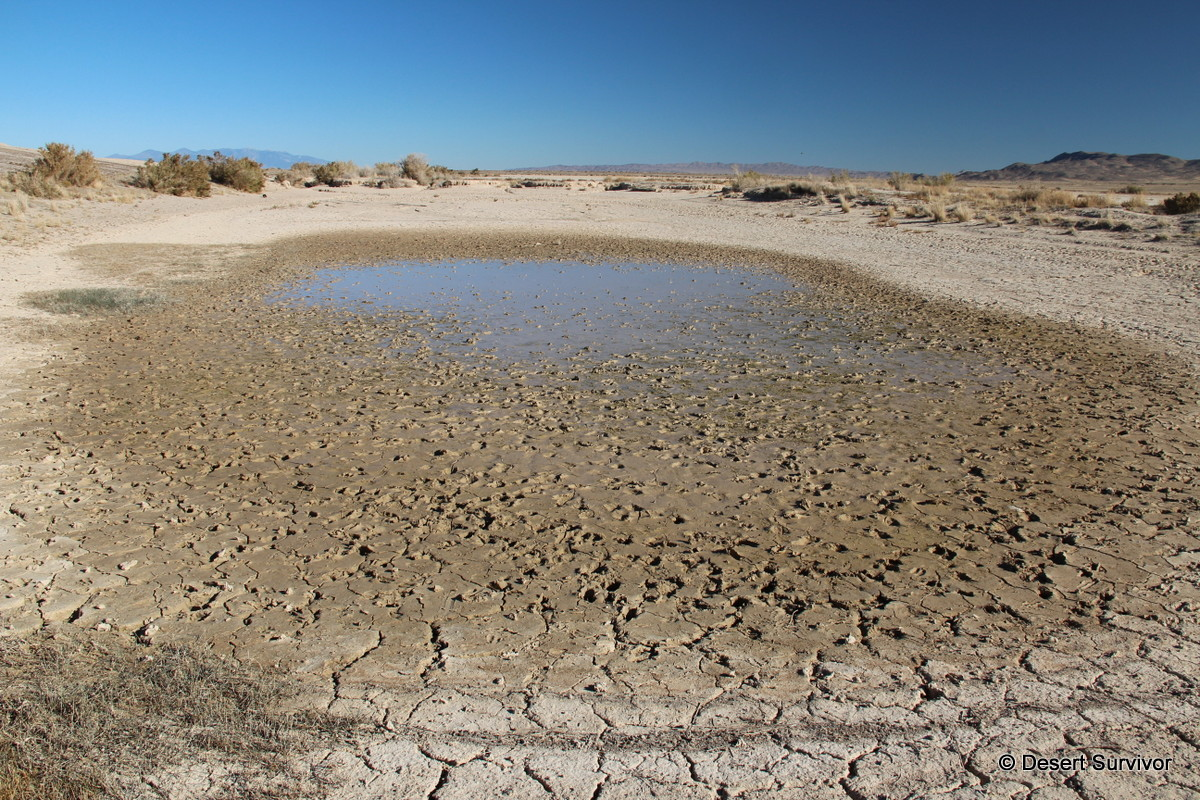
After her seventh trip, Hajra stood on Marwah, exhausted, dehydrated, her baby near death. And then -
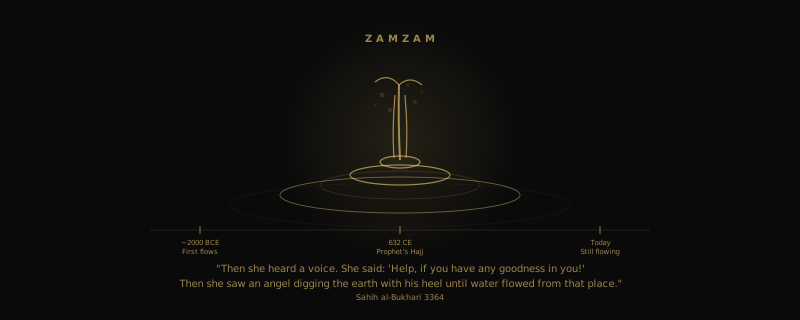
When she reached Al-Marwah [for the last time], she heard a voice. She said to herself: "Shh!" and listened attentively. She heard the voice again and said: "O [whoever you may be]! You have made me hear your voice; do you have something to help me?"
And behold! She saw an angel at the place of Zamzam, digging the earth with his heel [or his wing], till water flowed from that place.
Sahih al-Bukhari 3364It was the angel Jibreel (AS). He struck the ground with his heel - or, in another narration, his wing - and water began to gush from the earth. Pure, fresh water, in the middle of a barren desert where no water had any right to exist.
Hajra's reaction reveals her remarkable character:
She started to make something like a basin around it, using her hands, and started scooping the water into her water-skin, and the water was flowing out even as she was scooping.
The Prophet (SAW) said: "May Allah bestow mercy on the mother of Ismail! Had she let the Zamzam flow without trying to control it - or had she not scooped that water to fill her water-skin - Zamzam would have been a stream flowing on the surface of the earth."
Sahih al-Bukhari 3364Even in this moment of miraculous relief, Hajra acted practically. She did not stare in wonder - she immediately began to contain the water, to save it, to make sure it would last. The Prophet (SAW) lovingly noted this, saying that her efforts to contain the flow are the reason Zamzam is a well rather than a river.
She drank the water and suckled her child.
Sahih al-Bukhari 3364Simple words. But imagine the moment. After seven runs between mountains, after watching her baby toss in agony, after reaching the edge of despair - she drinks. She feeds her child. They live.
That water is still flowing. Over four thousand years later, the well of Zamzam has never dried up. Not once. In the middle of one of the most arid deserts on earth, in a city with no natural rivers or lakes, this well has continuously supplied water to millions of people every year.
Modern geological surveys have confirmed that the Zamzam well is unique. It is not fed by a single aquifer like normal wells - water seeps into it from multiple rock fractures. Its flow rate has remained remarkably consistent across centuries. Scientists have called it geologically anomalous.
But for the believer, the explanation is simpler: it is a miracle. A gift from Allah to a mother who refused to give up.
The Prophet (SAW) spoke of the special nature of Zamzam water:
"The water of Zamzam is for whatever purpose it is drunk for."
Sunan Ibn Majah 3062Imam Ibn al-Qayyim (rahimahullah) mentioned in Zad al-Ma'ad that he personally drank Zamzam for the purpose of gaining knowledge, and he found immense benefit in it. Scholars have drunk it with the intention of healing, of seeking knowledge, of having their sins forgiven. The Prophet (SAW) himself used to drink it and pour it over his head (Musnad Ahmad 14849).
Allah's help came after Hajra exhausted her human effort. Not on the first trip between the mountains. Not the second, the third, the fourth, the fifth, or the sixth. After the seventh. There is a profound lesson here about persistence in dua and effort. How many of us make dua once, twice, three times, and then give up? How many of us try a few times and conclude that Allah is not listening? Hajra's story teaches us: keep running. Keep asking. Keep trying. Allah's help may come at the moment you least expect it - but it will come. And when it comes, it will not be a trickle. It will be Zamzam - a spring that never dries up.
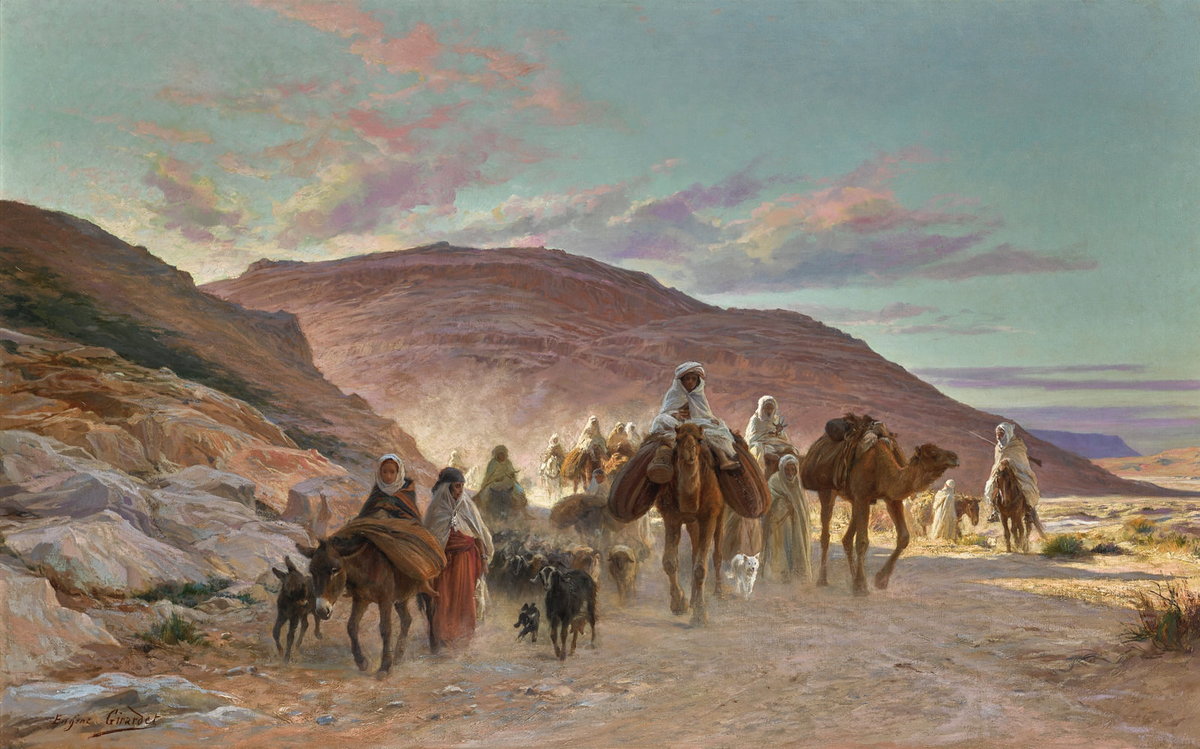
The water of Zamzam did not just save Hajra and Ismail - it transformed their barren valley into a place of settlement and civilisation. The narration continues:
The angel said to her: "Do not be afraid of being neglected, for this is the House of Allah which will be built by this boy and his father, and Allah never neglects His people."
Sahih al-Bukhari 3364Notice how the angel's words echoed Hajra's own declaration: "He will not neglect us." Allah confirmed her trust through His angel.
Then some people of the tribe of Jurhum, passing through the bottom of the valley, saw some birds circling in the air. They said: "Those birds must be circling over water." They sent one or two men who discovered the source of water. They returned and informed the rest.
They all came towards Hajra and said: "Would you allow us to settle at your place?" She said: "Yes, but you will have no right to possess the water." They agreed to that.
Sahih al-Bukhari 3364Hajra's wisdom is on display here. She was a lone woman with an infant, and a nomadic tribe came seeking to settle on her land. She could have been overwhelmed. Instead, she negotiated. She allowed them to stay but maintained ownership of the water - the most valuable resource in the desert. She was generous but not naive.
The tribe of Jurhum settled around Zamzam. More families came. A community grew. Trade routes began to pass through. What was once a barren, lifeless valley slowly became a town - and eventually the city of Makkah, the holiest place on earth.
Ismail grew up amongst them [Jurhum], learned Arabic from them, and when he reached the age of puberty, they liked him and married him to one of their women.
Sahih al-Bukhari 3364After some time, Hajra died. And so Ismail (AS) grew up in Makkah, married from the tribe of Jurhum, and became part of the community that his mother's faith and perseverance had created. He learned the Arabic language from them - the language in which the Quran would one day be revealed. All of this, from the faith of one woman in a desert.
From a barren valley with no life, Allah created the most important city in human spiritual history. From one woman's faith, an entire civilisation grew. The birds that circled over Zamzam were a sign - when Allah blesses a place, even the birds of the sky will testify to it. Think about the "barren valleys" in your own life - the situations that seem hopeless, the places where nothing seems to grow. Hajra's story reminds us that Allah can bring life from lifelessness, community from solitude, and rivers from rock.
Ibrahim (AS) did not abandon his family permanently. He returned to Makkah to visit, though years had passed. The narration in Sahih al-Bukhari records two remarkable visits that reveal Ibrahim's wisdom as a father - and a profound lesson about marriage.
Ibrahim came [to Makkah] after Ismail had married. He did not find Ismail at home. He asked Ismail's wife about him, and she said: "He has gone out in search of our livelihood."
Then he asked her about their way of living and their condition. She replied: "We are living in misery; we are in hardship and destitution," complaining to him.
He said: "When your husband returns, convey my greetings to him and tell him to change the threshold of his gate."
Sahih al-Bukhari 3364When Ismail returned and sensed that something was different, he asked his wife: "Did anyone come to you?" She replied: "Yes, an old man came and asked about you, and I told him about our condition." Ismail asked: "Did he advise you anything?" She said: "Yes, he told me to convey his greetings to you and to tell you to change the threshold of your gate."
Ismail said: "That was my father, and he has ordered me to divorce you. Go back to your family."
Ismail understood the metaphor immediately. He divorced her and married another woman from Jurhum.
Ibrahim came again and did not find Ismail. He went to Ismail's wife and asked about him. She said: "He has gone out in search of our livelihood."
He asked: "How are you getting on?" She replied: "We are prosperous and well off," and she praised Allah.
He asked: "What do you eat?" She said: "Meat." He asked: "What do you drink?" She said: "Water."
He said: "O Allah! Bless their meat and water."
Sahih al-Bukhari 3364The Prophet (SAW) noted that Ibrahim's dua for the blessing of meat and water was significant - at that time, Makkah had no grain. The Prophet (SAW) said: "If she had said 'grain,' Ibrahim would have prayed for that too, and Makkah would have had grain in abundance."
Then Ibrahim told the second wife: "When your husband returns, convey my greetings to him and tell him to keep firm the threshold of his gate."
When Ismail returned and heard this, he said: "That was my father, and you are the threshold. He has ordered me to keep you."
The "threshold of the gate" is a beautiful metaphor. Your spouse is the threshold of your home - they set the tone for your entire household. Ibrahim (AS) was teaching his son that gratitude and contentment are the foundations of a blessed home. The first wife complained despite having sustenance. The second wife praised Allah despite having only meat and water. The difference was not in their circumstances - it was in their hearts.
This lesson is embedded within the Hajj story for a reason. A home built on gratitude attracts Allah's blessings. A home built on complaint repels them. Ibrahim did not just build the Ka'bah - he taught his son how to build a home.
After years of separation, Ibrahim (AS) returned to find his son grown into a young man - strong, righteous, and devoted to Allah. Father and son were finally reunited. But the joy of reunion was about to be tested by the most devastating trial any parent could face.
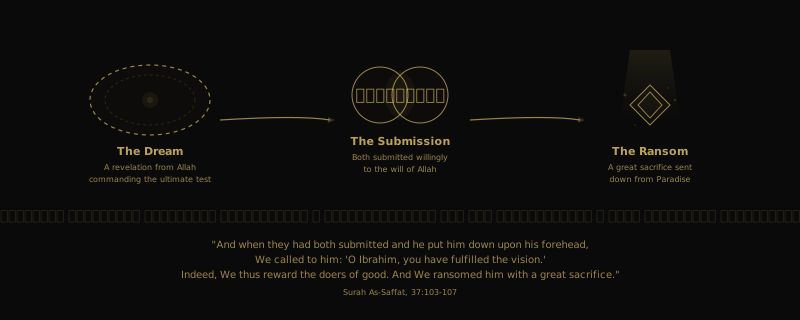
Ibrahim (AS) saw a dream. And the dreams of Prophets are not mere dreams - they are revelation from Allah. As Ibn Hajar al-Asqalani (rahimahullah) explained in Fath al-Bari, the scholars of Ahl al-Sunnah are unanimous that the dreams of the Prophets are a form of wahy (revelation), as Aisha (RA) narrated: "The commencement of divine revelation to the Messenger of Allah (SAW) was in the form of true dreams" (Sahih al-Bukhari 3).
In his dream, Ibrahim saw himself slaughtering his own son.
Think about this. After waiting decades for a child. After leaving him as a baby in the desert. After years of absence. Finally reunited - and now asked to kill him. With his own hands.
Ibrahim did not keep this to himself. He went to his son and spoke to him openly:
فَلَمَّا بَلَغَ مَعَهُ السَّعْيَ قَالَ يَا بُنَيَّ إِنِّي أَرَىٰ فِي الْمَنَامِ أَنِّي أَذْبَحُكَ فَانظُرْ مَاذَا تَرَىٰ ۚ قَالَ يَا أَبَتِ افْعَلْ مَا تُؤْمَرُ ۖ سَتَجِدُنِي إِن شَاءَ اللَّهُ مِنَ الصَّابِرِينَ
"And when he reached with him [the age of] exertion, he said, 'O my son, indeed I have seen in a dream that I [must] sacrifice you, so see what you think.' He said, 'O my father, do as you are commanded. You will find me, if Allah wills, of the patient.'"
Surah As-Saffat, 37:102Study the words carefully. Ibrahim said: "fandhur madha tara" - "so see what you think." He was not asking permission. He was not offering a choice. He was sharing the divine command with his son so they could face it together. And Ismail's response is staggering in its maturity, its faith, and its submission:
"O my father, do as you are commanded. You will find me, if Allah wills, of the patient."
A son telling his father to carry out the command to slaughter him. Not resisting. Not fleeing. Not bargaining. Submitting. And even in this moment, Ismail had the humility to say "in sha Allah" - "if Allah wills" - because he did not take his own patience for granted. He knew that only Allah could give him the strength to endure what was coming.
فَلَمَّا أَسْلَمَا وَتَلَّهُ لِلْجَبِينِ ﴿١٠٣﴾ وَنَادَيْنَاهُ أَن يَا إِبْرَاهِيمُ ﴿١٠٤﴾ قَدْ صَدَّقْتَ الرُّؤْيَا ۚ إِنَّا كَذَٰلِكَ نَجْزِي الْمُحْسِنِينَ ﴿١٠٥﴾ إِنَّ هَٰذَا لَهُوَ الْبَلَاءُ الْمُبِينُ ﴿١٠٦﴾ وَفَدَيْنَاهُ بِذِبْحٍ عَظِيمٍ ﴿١٠٧﴾
"Then when they had both submitted [to Allah] and he put him down upon his forehead, We called to him, 'O Ibrahim, you have fulfilled the vision.' Indeed, We thus reward the doers of good. Indeed, this was the clear trial. And We ransomed him with a great sacrifice."
Surah As-Saffat, 37:103-107Pay attention to the word "aslama" - "they both submitted." Not just Ibrahim. Both of them. Father and son. This is the essence of the word Islam - submission to the will of Allah. The entire religion is named after what happened in this moment.
Ibrahim laid Ismail face-down - "tallahu lil-jabeen" - he put him on his forehead. Scholars explain this was so Ibrahim would not have to look at his son's face as he drew the knife, lest his fatherly love weaken his resolve. Even in obedience, the human heart was breaking.
And then, at the very last moment, Allah called out. "You have fulfilled the vision." The test was complete. Ibrahim had proven that there was nothing in creation - not even his own beloved child - that he would not sacrifice for Allah. And Allah, in His infinite mercy, ransomed Ismail with a great sacrifice - a ram was sent down from Paradise to be slaughtered in Ismail's place.
Key Connection: This is the origin of the Qurbani (Udhiyah) - the animal sacrifice that every pilgrim performs during Hajj, and that Muslims around the world perform during Eid al-Adha. When you sacrifice your animal, you are commemorating the moment Allah spared Ismail and accepted Ibrahim's willingness. The sacrifice was never about the blood or the meat. Allah says: "Their meat will not reach Allah, nor will their blood, but what reaches Him is taqwa (piety/consciousness) from you" (Quran 22:37). It is about what you are willing to give up for the sake of your Lord.
The sacrifice was never about the animal. It was about Ibrahim's willingness to give up what he loved most for the sake of Allah. Allah did not ultimately require Ismail's life - He required Ibrahim's willingness. The test was of the heart, not the knife.
Hajj asks every pilgrim the same question Ibrahim was asked: What are you willing to sacrifice? Your ego? Your comfort? Your attachment to this dunya (world)? Your grudges? Your sins? When you stand in Arafat, stripped of your worldly clothes, wearing only two white sheets that resemble a burial shroud, you are being asked to let go. To submit. To say, as Ibrahim and Ismail said: we have submitted.
What is your Ismail? What is the thing you hold onto so tightly that it competes with Allah in your heart? That is what Hajj is asking you to place on the altar.

As Ibrahim (AS) took Ismail to carry out Allah's command, they did not walk undisturbed. The Shaytan - Iblis himself - appeared to Ibrahim to dissuade him from obeying Allah. This is narrated through multiple chains, including in Musnad Ahmad.
When Ibrahim left Mina heading towards the place of sacrifice, the Shaytan appeared to him at what is now known as Jamrat al-Aqaba (the large pillar). He tried to tempt Ibrahim, to fill his heart with doubt, to make him disobey Allah's command. Jibreel (AS) said to Ibrahim: "Pelt him!" So Ibrahim threw seven stones at the Shaytan, and he disappeared into the ground.
Ibrahim continued walking. The Shaytan appeared again at what is now the Jamrat al-Wusta (the middle pillar). Again, he whispered. Again, Jibreel said: "Pelt him!" Ibrahim threw seven more stones, and the Shaytan sank into the ground again.
Ibrahim continued. A third time, the Shaytan appeared at what is now Jamrat al-Sughra (the small pillar). A third time, Ibrahim pelted him with seven stones. A third time, the Shaytan was defeated.
Key Connection: These three locations became the three Jamarat that pilgrims pelt during the days of Hajj. When you throw your stones at the pillars in Mina, you are re-enacting Ibrahim's rejection of the Shaytan. Each stone is a declaration: "I choose Allah over you." The ritual is performed on the 10th, 11th, and 12th (and optionally 13th) of Dhul Hijjah - seven stones at each Jamrah, following the exact pattern of Ibrahim (AS).
Some scholars, including Ibn al-Qayyim in Zad al-Ma'ad, note that the Shaytan also appeared to Hajra and to Ismail (AS), trying to dissuade each of them from accepting Allah's decree. Both rejected him. The entire family was united in their defiance of Iblis and their submission to Allah.
The pelting is not just about throwing stones at pillars. It is a declaration of war against your own nafs (ego) and the whispers of Shaytan. Every stone says: "I reject you. I choose Allah."
Think about the Shaytan's strategy with Ibrahim. He did not appear once and give up. He appeared three times. This is how temptation works - it is persistent. It comes back. It tries different angles. The lesson is that resisting Shaytan is not a one-time event but a continuous struggle. You must pelt him again, and again, and again.
What temptations in your life need to be pelted? What whispers keep returning? What doubts keep resurfacing? The Jamarat teach you that you have a weapon: firm rejection, backed by faith. Pick up your stones and throw.
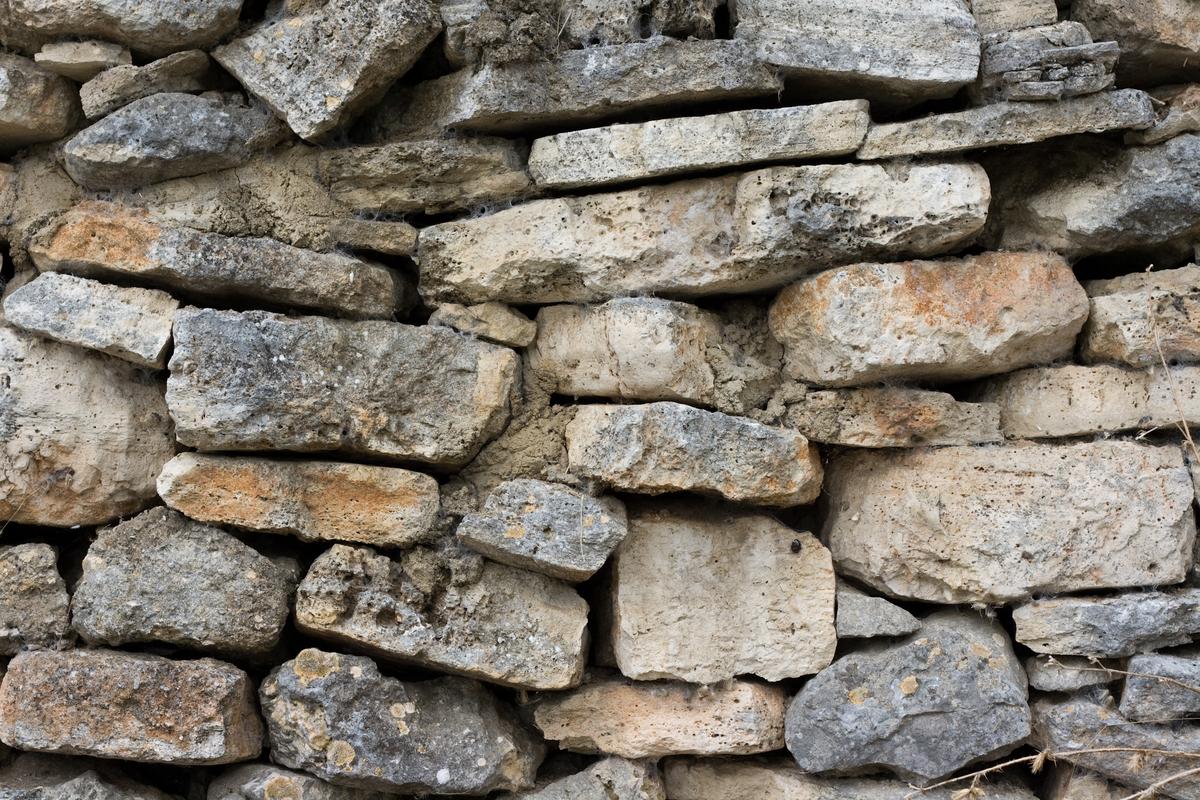
After all these trials - the fire, the separation, the desert, the sacrifice, the confrontation with Shaytan - the time came for the crowning achievement of Ibrahim's life. Allah commanded him to build a House of worship. Not just any house - the first house of worship ever established for humanity on the face of the earth:
إِنَّ أَوَّلَ بَيْتٍ وُضِعَ لِلنَّاسِ لَلَّذِي بِبَكَّةَ مُبَارَكًا وَهُدًى لِّلْعَالَمِينَ
"Indeed, the first House [of worship] established for mankind was that at Bakkah [Makkah] - blessed and a guidance for the worlds."
Surah Aal-Imran, 3:96Allah revealed to Ibrahim the exact location and dimensions of the House. Some narrations mention that Allah sent a wind that cleared the area, or that a cloud cast a shadow over the exact spot, showing Ibrahim where to build. Ibrahim told his son: "O Ismail, Allah has ordered me to build a house here." Ismail (AS) said: "Then obey your Lord." Ibrahim asked: "Will you help me?" Ismail said: "I will help you."
And so, father and son began to build. Together.
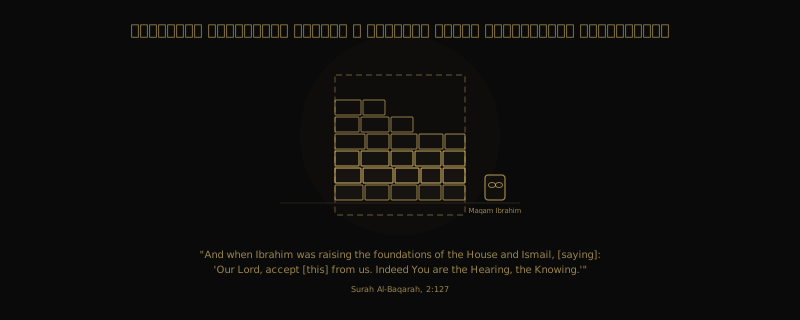
The Prophet (SAW) said: "Ismail would bring the stones and Ibrahim would build. And when the walls became high, Ismail brought this stone [the Maqam Ibrahim] and placed it for Ibrahim, who stood on it and carried on building. And both of them were raising the foundations of the House and saying:
Sahih al-Bukhari 3364رَبَّنَا تَقَبَّلْ مِنَّا ۖ إِنَّكَ أَنتَ السَّمِيعُ الْعَلِيمُ
Rabbana taqabbal minna, innaka Antas-Samee'ul-'Aleem.
"Our Lord! Accept [this] from us. Indeed, You are the All-Hearing, the All-Knowing."
Surah Al-Baqarah, 2:127
With every stone they placed, they made this dua. Not a dua for fame. Not a dua for legacy. A dua for acceptance. "Our Lord, accept this from us." The Friend of Allah, the father of Prophets, the man who survived fire - worried that his worship might not be accepted. This is the essence of ikhlas (sincerity) and khawf (reverential fear of Allah).
Their supplication continued:
رَبَّنَا وَاجْعَلْنَا مُسْلِمَيْنِ لَكَ وَمِن ذُرِّيَّتِنَا أُمَّةً مُّسْلِمَةً لَّكَ وَأَرِنَا مَنَاسِكَنَا وَتُبْ عَلَيْنَا ۖ إِنَّكَ أَنتَ التَّوَّابُ الرَّحِيمُ
Rabbana waj'alna Muslimayni laka wa min dhurriyyatina ummatan Muslimatan laka wa arina manasikana wa tub 'alayna innaka Antat-Tawwabur-Raheem.
"Our Lord, and make us Muslims [in submission] to You and from our descendants a Muslim nation [in submission] to You. And show us our rites [of Hajj] and accept our repentance. Indeed, You are the Accepting of repentance, the Merciful."
Surah Al-Baqarah, 2:128
And then they made a dua whose answer would change the course of human history forever:
رَبَّنَا وَابْعَثْ فِيهِمْ رَسُولًا مِّنْهُمْ يَتْلُو عَلَيْهِمْ آيَاتِكَ وَيُعَلِّمُهُمُ الْكِتَابَ وَالْحِكْمَةَ وَيُزَكِّيهِمْ ۚ إِنَّكَ أَنتَ الْعَزِيزُ الْحَكِيمُ
Rabbana wab'ath feehim Rasoolan minhum yatloo 'alayhim ayatika wa yu'allimuhum al-Kitaba wal-Hikmata wa yuzakkeehim. Innaka Antal-'Azeezul-Hakeem.
"Our Lord, and send among them a messenger from themselves who will recite to them Your verses and teach them the Book and wisdom and purify them. Indeed, You are the Exalted in Might, the Wise."
Surah Al-Baqarah, 2:129
This dua - made thousands of years before his birth - was answered with the coming of Prophet Muhammad (SAW). The Prophet (SAW) himself said: "I am the dua of my father Ibrahim." (Musnad Ahmad 17163). Every time you send salawat upon the Prophet, you are witnessing the answer to a dua that Ibrahim made while laying stones for the Ka'bah.
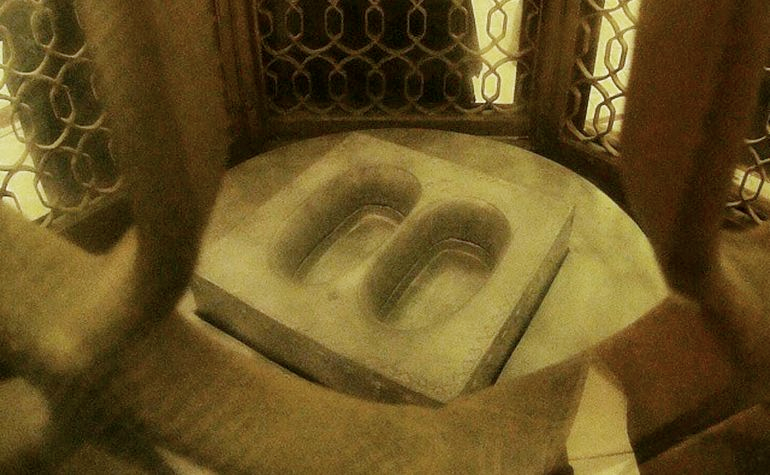
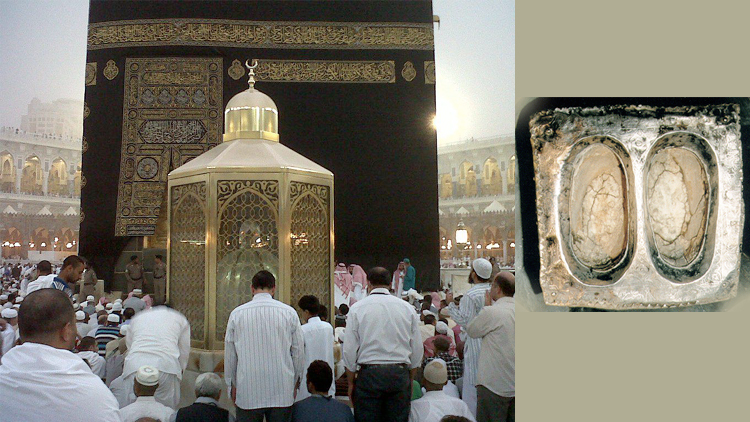
As the walls of the Ka'bah grew higher, Ibrahim needed something to stand on. Ismail (AS) brought him a large stone, which Ibrahim stood upon as he continued building. Allah caused this stone to miraculously soften, and Ibrahim's feet sank into it, leaving permanent footprints.
Sa'eed bin Jubair reported that the Prophet (SAW) said: "The stone is the Maqam Ibrahim. Allah made it soft, so that his feet sank into it."
This stone - the Maqam Ibrahim - is preserved to this day, encased in a glass and gold casing near the Ka'bah. Pilgrims can still see the impression of Ibrahim's footprints. Allah commanded in the Quran:
وَاتَّخِذُوا مِن مَّقَامِ إِبْرَاهِيمَ مُصَلًّى
"And take the Maqam Ibrahim as a place of prayer."
Surah Al-Baqarah, 2:125This is why, after completing Tawaf (circling the Ka'bah), pilgrims pray two rak'ahs behind the Maqam Ibrahim. You are praying at the very spot where Ibrahim stood, building the House of Allah stone by stone, supplicating with every breath.
A father and son, building a house for Allah, praying with every stone they lay: "Our Lord, accept this from us." This is the spirit of all worship - sincerity combined with the fear that it may not be accepted. The greatest Prophet worried about acceptance. Khalilullah himself was not certain his deeds would be accepted. How much more should we worry? How much more should we beg?
And yet there is hope in this too. Ibrahim asked, and Allah accepted. He asked for a messenger from his descendants, and Allah sent the greatest human who ever lived. He asked for hearts to incline towards his barren valley, and two billion hearts now yearn for it. The lesson: never stop asking. Never assume you are unworthy of asking. And never underestimate what Allah can do with a sincere dua.
The Ka'bah was complete. The first House of worship on earth stood in the valley of Makkah, built by the hands of a Prophet and his son, sanctified by their duas. And now came the command that would echo through all of time:
وَأَذِّن فِي النَّاسِ بِالْحَجِّ يَأْتُوكَ رِجَالًا وَعَلَىٰ كُلِّ ضَامِرٍ يَأْتِينَ مِن كُلِّ فَجٍّ عَمِيقٍ
"And proclaim to the people the Hajj [pilgrimage]; they will come to you on foot and on every lean camel; they will come from every distant pass."
Surah Al-Hajj, 22:27Ibrahim (AS) said: "O my Lord, how shall I convey this to the people when my voice will not reach them?" Allah said: "You call, and We will convey it."
So Ibrahim stood upon his rock - some scholars say it was the Maqam Ibrahim, others say it was the mountain of Abu Qubays - and he called out:
"O people! Allah has prescribed for you the Hajj, so perform the Hajj!"
The great mufassir (Quran commentator) Ibn Kathir (rahimahullah) narrated in his tafsir that Allah caused Ibrahim's voice to reach every soul that would ever exist until the Day of Judgement. Every soul that was destined to perform Hajj heard that call and responded. Those who responded once will perform Hajj once. Those who responded twice will perform it twice. And so on.
This means that when you say the Talbiyah -
لَبَّيْكَ اللَّهُمَّ لَبَّيْكَ، لَبَّيْكَ لَا شَرِيكَ لَكَ لَبَّيْكَ، إِنَّ الْحَمْدَ وَالنِّعْمَةَ لَكَ وَالْمُلْكَ، لَا شَرِيكَ لَكَ
Labbayk Allahumma labbayk. Labbayk la shareeka laka labbayk. Innal-hamda wan-ni'mata laka wal-mulk. La shareeka lak.
"Here I am, O Allah, here I am. Here I am, You have no partner, here I am. Verily all praise, grace, and sovereignty belong to You. You have no partner."
- you are not merely reciting words. You are answering a call that was made to your soul before you were born. "Labbayk" literally means "Here I am, at your service, again and again." It is a response. An answer. Ibrahim called, and you are answering.
You are not going to Hajj by accident. You were called. From before you were born, your soul heard Ibrahim's voice and responded. Your "Labbayk Allahumma Labbayk" is not a new utterance - it is the echo of a promise your soul made before time. Every pilgrim who has ever walked towards the Ka'bah was answering the same call. You are part of an unbroken chain stretching back thousands of years, to the moment Ibrahim stood on his rock and raised his voice, and Allah carried it to the ends of creation.
When you finally see the Ka'bah for the first time, and tears fill your eyes for a reason you cannot explain, know this: your soul recognises the place it was called to. You are home.
After Ibrahim and Ismail (AS), the Ka'bah was maintained as a centre of monotheistic worship. Pilgrims came, as Allah had promised. Makkah grew into a thriving city on the trade routes between Yemen and Syria.
But over the centuries, something changed. Slowly, insidiously, idolatry crept back in. It is said that the first person to introduce idol worship to the area around the Ka'bah was Amr ibn Luhayy, a chief of the Khuza'ah tribe. The Prophet (SAW) said: "I saw Amr ibn Luhayy dragging his intestines in the Hellfire" (Sahih al-Bukhari 3521), because he was the first to change the religion of Ibrahim.
By the time Prophet Muhammad (SAW) was born in Makkah, the House that Ibrahim built for the worship of the One God had been surrounded by 360 idols. Each tribe had placed its own idol in or around the Ka'bah. The Quraysh still performed some remnants of Ibrahim's rites - they performed Tawaf, they honoured the months of Hajj, they provided water to pilgrims - but the essence of Tawheed had been buried under layers of shirk.
The very house that was built with the dua "Our Lord, make us Muslims in submission to You" had become the epicentre of polytheism in Arabia.
But Ibrahim's dua was not forgotten by Allah. "Send among them a messenger from themselves..." That dua was answered in the year 570 CE, when Muhammad ibn Abdullah (SAW) was born in Makkah - a descendant of Ismail, a descendant of Ibrahim.
For twenty-three years, the Prophet (SAW) preached the message of Tawheed - the same message Ibrahim had preached. He faced persecution, exile, and war. And then, in the eighth year after Hijrah, he returned to Makkah in triumph. He entered the city with an army of 10,000, and the Quraysh surrendered without a fight.
The Prophet (SAW) entered the Ka'bah. He ordered that all images inside be erased. He walked out to the courtyard and saw the 360 idols surrounding the House his ancestor had built. He took his staff and pointed at each idol, reciting:
وَقُلْ جَاءَ الْحَقُّ وَزَهَقَ الْبَاطِلُ ۚ إِنَّ الْبَاطِلَ كَانَ زَهُوقًا
"Truth has come, and falsehood has departed. Indeed, falsehood is [by nature] ever bound to depart."
Surah Al-Isra, 17:81As he pointed his stick at each idol, it fell on its face.
Sahih al-Bukhari 4287One by one, the idols fell. The House of Ibrahim was purified. The monotheistic legacy that had been corrupted for centuries was restored. The dua of Ibrahim was fully answered.
The corruption of the Ka'bah did not happen overnight. It happened gradually, one idol at a time, one compromise at a time, over generations. This is how faith is eroded - not in sudden collapses but in slow, imperceptible shifts. The story is a warning: guard your Tawheed fiercely. The people who placed idols around the Ka'bah did not think they were opposing Ibrahim - they thought they were honouring their ancestors. Misguidance often wears the mask of tradition.
But the story is also a promise: no matter how far things have fallen, Allah can restore them. If Allah can purify His House after centuries of shirk, He can purify your heart after years of heedlessness. No one is too far gone. That is the hope of Hajj.
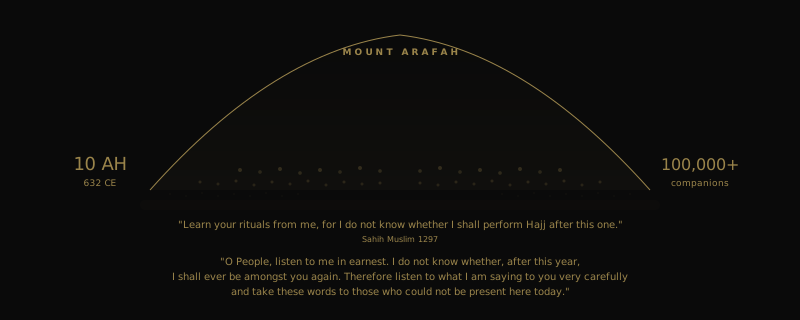
In the tenth year after Hijrah (632 CE), the Prophet Muhammad (SAW) performed his Hajj. It was his first and only Hajj - known as Hajjat al-Wada', the Farewell Hajj. He sensed that his time in this world was drawing to a close, and he wanted to teach his Ummah the rites of Hajj, once and for all.
The Prophet (SAW) said: "Learn your rites [of Hajj] from me, for I do not know whether I will be performing Hajj after this one."
Sahih Muslim 1297Over 100,000 Companions accompanied him. They watched his every movement, listened to his every word, memorised his every action. Jabir ibn Abdullah (RA) narrated the entire Hajj of the Prophet (SAW) in a famous, lengthy hadith preserved in Sahih Muslim (1218) - one of the most detailed hadiths in all of Islamic literature. It describes everything: how the Prophet entered Ihram, how he performed Tawaf, how he ran between Safa and Marwah, how he stood at Arafat, how he pelted the Jamarat, how he sacrificed his animals, and how he delivered his Farewell Sermon.
During this Hajj, on the plain of Arafat, the Prophet (SAW) delivered his Farewell Sermon to the largest gathering of Muslims in his lifetime. He spoke about the sanctity of life, the equality of all people, the rights of women, the prohibition of riba (interest), and the obligation to hold fast to the Quran and the Sunnah. He then asked the people:
"Have I conveyed the message?"
They said: "Yes!"
He said: "O Allah, bear witness."
Sahih al-Bukhari 1739; Sahih Muslim 1218It was during or shortly after this Hajj that the final verse of the Quran regarding the completion of the religion was revealed:
الْيَوْمَ أَكْمَلْتُ لَكُمْ دِينَكُمْ وَأَتْمَمْتُ عَلَيْكُمْ نِعْمَتِي وَرَضِيتُ لَكُمُ الْإِسْلَامَ دِينًا
"This day I have perfected for you your religion and completed My favour upon you and have approved for you Islam as your religion."
Surah Al-Ma'idah, 5:3The Prophet (SAW) passed away approximately three months later. He left behind a complete religion, a purified Ka'bah, and a detailed example of how to perform Hajj. Everything in this guide follows his example from that Hajj - the same rituals, in the same order, as narrated primarily by Jabir (RA) and other Companions.
When you perform Hajj, you are walking where the Prophet (SAW) walked, standing where he stood, and saying what he said. You are connected to him by an unbroken chain of transmission - from Jabir, to the scholars of his generation, to the scholars of the next, down through the centuries to your teacher and to you.
The Circle is Complete: Ibrahim (AS) built the Ka'bah and called humanity to Hajj. Centuries passed. Idolatry corrupted the rites. Muhammad (SAW) - the answer to Ibrahim's own dua - came, purified the Ka'bah, and restored the Hajj to its original form. The final Prophet performed the pilgrimage established by the first great Patriarch. And now, you follow in both their footsteps. From Ibrahim's call to Muhammad's example to your Labbayk - the circle is complete.
As you prepare for this journey, let the words of Allah guide you:
وَأَتِمُّوا الْحَجَّ وَالْعُمْرَةَ لِلَّهِ
Wa atimmul-Hajja wal-'Umrata lillah.
"And complete the Hajj and Umrah for Allah."
Surah Al-Baqarah, 2:196
The Prophet (SAW) performed only one Hajj in his entire life. He did not take it for granted. He did not treat it casually. He said: "Learn your rites from me, for I do not know whether I will be performing Hajj after this one." He knew the weight of what he was doing. He knew it might be his last. And he was right - it was.
Approach your Hajj with the same awareness. You do not know if you will ever return. You do not know if this is your only chance. Treat every step as if it is your last. Pray every prayer as if it is your final one. Make every dua as if you will never raise your hands again. This is not pessimism - this is the Sunnah. The Prophet (SAW) taught us to live with urgency, to worship with intensity, and to never postpone what matters most.
How well do you know the story behind the rites of Hajj?
Take the Story of Ibrahim Quiz →Bangladesh has set September 24, 2026, as the final, non-extendable deadline for Hajj 2027 registration, with a national...
The Saudi Ministry of Hajj and Umrah has opened Hajj 2027 preparations with meetings involving Hajj affairs offices from...
Saudi Arabia's Ministry of Hajj and Umrah has launched Direct Umrah, a digital service letting pilgrims at home and abro...
The Umrah 1448 AH season is drawing to a close. Saudi Arabia set September 23 as the final date for Umrah pilgrims to en...