Nusuk app adds new features and offline access for pilgrims
Saudi Arabia's official Nusuk app has added spiritual, navigation and health tools plus a zero-data offline mode, and no...
Preparation, Mina, the Day of Arafah, and Muzdalifah
Hajj is not a holiday. It is not a trip. It is one of the five pillars of Islam - an obligation upon every Muslim who is physically and financially able, once in a lifetime. The preparation you put in before you leave will directly determine the quality of the experience you have when you arrive. Start preparing months in advance, not days.
The spiritual preparation for Hajj is more important than any item you pack in your suitcase. You are about to embark on a journey that the Prophet Ibrahim (AS) established, that the Prophet Muhammad (SAW) perfected, and that every sincere Muslim dreams of. Treat it with the gravity it deserves.
The Prophet (SAW) said: “Whoever performs Hajj for the sake of Allah and does not commit any obscenity or transgression shall return free of sin as the day his mother bore him.”
Sahih al-Bukhari 1521Read that hadith again. Free of sin. Like a newborn baby. Every sin you have ever committed in your life - wiped clean. That is the reward of a Hajj performed sincerely, with patience, and without transgression. There is no other act of worship in Islam that carries this promise so explicitly. Prepare accordingly.
Physical Preparation: Start walking regularly at least two to three months before Hajj. Build your stamina gradually. During Hajj you will walk between 10 and 20 kilometres per day, often in temperatures exceeding 40°C. If you are not physically prepared, the exhaustion will rob you of your ability to worship during the most critical moments. Walk in the heat if possible. Do stairs. Build leg strength. Your body is your vehicle for this journey - make sure it is ready.
Mental Preparation: Your patience will be tested constantly. The heat is relentless. The crowds are unlike anything you have experienced. You will lose your companions. Buses will be delayed for hours. Toilets will be filthy. Sleep will be scarce. Food will be basic. And through all of this, you must maintain your composure, your kindness, and your devotion. The Prophet (SAW) said: “The strong believer is better and more beloved to Allah than the weak believer, while there is good in both.” (Muslim 2664). Mental strength is as important as physical strength on Hajj.
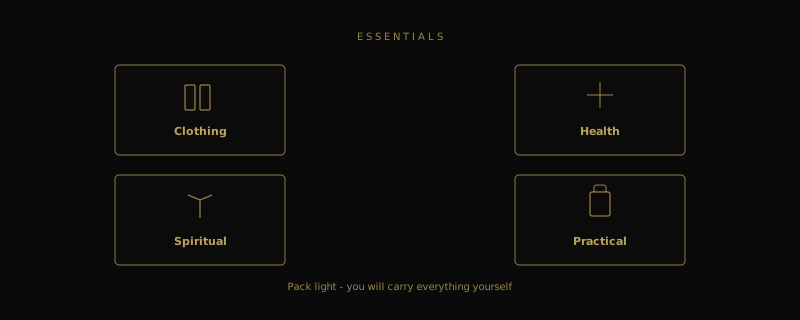
Pack light but pack smart. You will be moving between locations frequently, often carrying your belongings with you. Every unnecessary item becomes a burden. Every forgotten essential becomes a crisis. The following list has been refined through the experience of countless pilgrims.
Warning: Do NOT take valuables, jewellery, or large amounts of cash. Theft does occur despite the sacred setting. Keep your passport, phone, and essential money on your person at ALL times - in a waist pouch or belt hidden under your clothing. If you put your bag down, assume you may not see it again.
The Hajj is a once-in-a-lifetime spiritual opportunity for most people. It is the closest you will come on this earth to the Day of Judgement - standing equal with millions, stripped of status, wealth, and identity, answering the call of your Creator. Do not squander it.
Disable social media. Turn off notifications. Delete apps if you must. Be fully, completely, utterly present.
Keep your Hajj days intimate with Allah alone.
The Prophet (SAW) never had a camera - he had khushoo (humility and focus). He never posted a status update from Arafah - he raised his hands to the Lord of the heavens and the earth and wept. There will be time to share your experience later. There will never be another moment like the one you are about to live.
Every second you spend adjusting a camera angle at Arafah is a second you could have spent in dua. Every WhatsApp message you send from Muzdalifah is a moment of dhikr lost forever. The people back home can wait. Allah cannot - this appointment has a fixed time, and it will not come again.
You are about to stand on the plain of Arafah - where Adam (AS) and Hawwa (Eve) were reunited after being sent down to Earth, where the Prophet Muhammad (SAW) delivered his farewell sermon to over 100,000 companions, where Allah draws near and mentions you with pride to the angels. You are about to sleep under the open sky at Muzdalifah with nothing between you and the stars. You are about to stone the pillars that represent the Shaytan who tried to turn Ibrahim (AS) away from sacrificing his son.
Do not let a notification steal any of those moments from you.

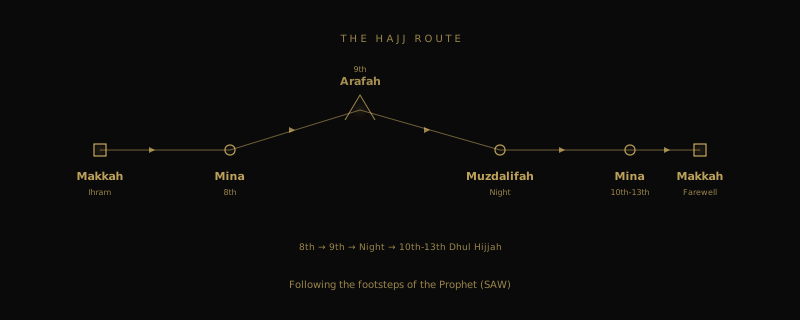
Before we dive into the details, it is essential to understand the complete route of Hajj. Each stage follows the next in a divinely ordained sequence that traces the footsteps of the Prophet Muhammad (SAW) during his farewell pilgrimage in the 10th year after Hijrah.
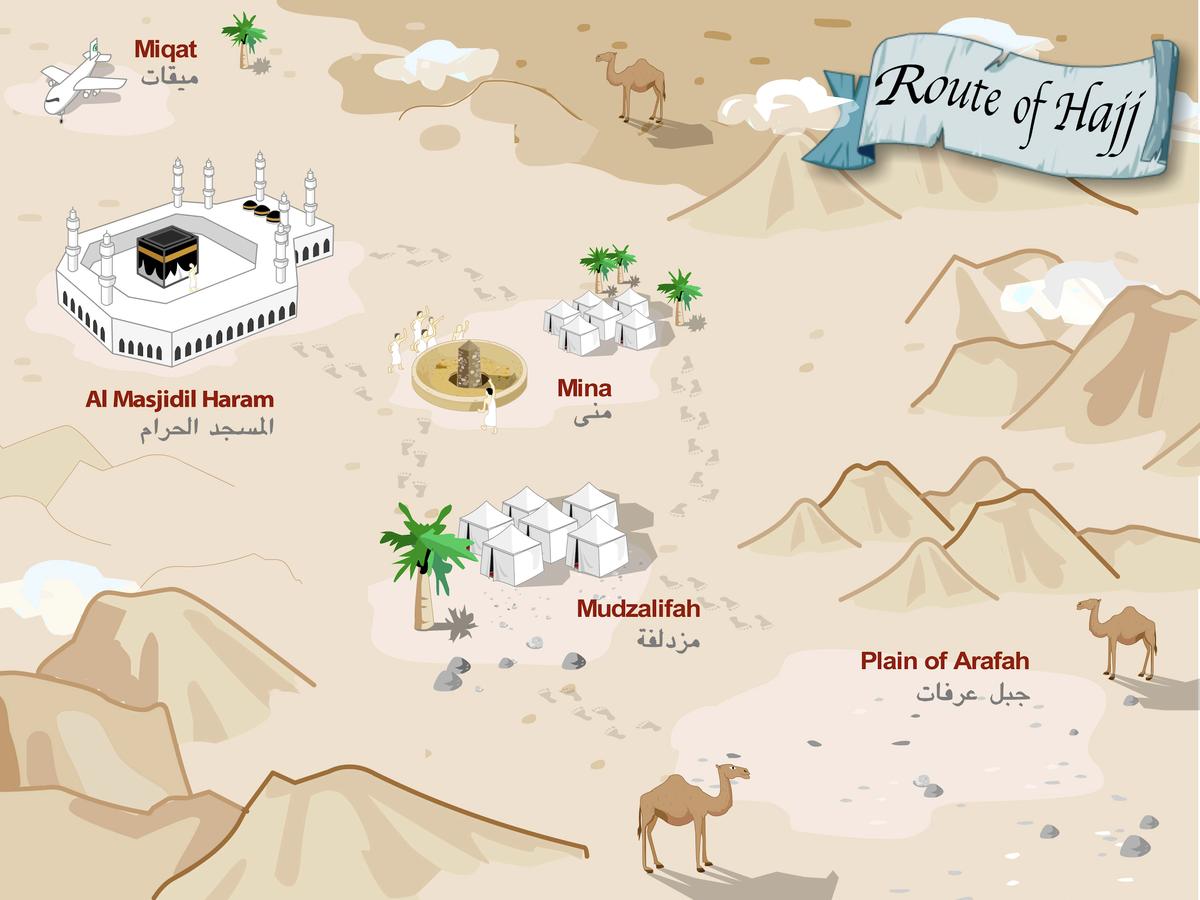
This page covers steps 4 through 6 in detail - from entering ihram on the 8th of Dhul Hijjah through the night at Muzdalifah. The remaining rites (10th onwards) are covered in Hajj Part 2.
The 8th of Dhul Hijjah is called Yawm al-Tarwiyah - literally, the Day of Quenching or Watering. Historically, this was the day pilgrims would fill their water containers and water their animals in preparation for the journey ahead to Arafah. There was no running water in Mina or Arafah, so this was a day of essential practical preparation. Today the name remains, even though water infrastructure has been modernised.
This is the day Hajj officially begins in earnest. Whatever type of Hajj you are performing, the 8th is when the journey to the sacred sites starts.
For Tamattu’ pilgrims: You completed your Umrah earlier and have been out of ihram. Now you must enter ihram again, this time specifically for Hajj. Do this from your accommodation in Makkah (or wherever you are staying). The same etiquettes apply as when you entered ihram for Umrah:
Make the intention for Hajj:
Labbaika Allahumma Hajjan
“Here I am, O Allah, for Hajj.”
You may also say the fuller intention:
Allahumma inni ureedul-Hajja fa yassirhu li wa taqabbalhu minni
“O Allah, I intend to perform Hajj, so make it easy for me and accept it from me.”
For Qiraan and Ifraad pilgrims: You are already in ihram from the Miqat and have been in ihram since your arrival. You simply continue in your state of ihram.
Conditional Intention: If you are doing Tamattu’ and are concerned about illness or an emergency that might prevent you from completing Hajj, you can add the condition: “Allahumma mahilli haithu habastani” (“O Allah, my place of exiting ihram is wherever You prevent me”). This allows you to exit ihram without penalty if genuinely prevented from completing the rites. This is based on the hadith of Duba’ah bint al-Zubayr (Bukhari 5089, Muslim 1207).
Once you have made your intention, begin reciting the Talbiyah and do not stop:
Labbayk Allahumma labbayk, labbayk la shareeka laka labbayk, innal hamda wan-ni’mata laka wal-mulk, la shareeka lak
“Here I am, O Allah, here I am. Here I am, You have no partner, here I am. Verily all praise, grace, and sovereignty belong to You. You have no partner.”
Leave for Mina before Zuhr if possible - this is the Sunnah of the Prophet (SAW). Mina is approximately 8 kilometres from Masjid al-Haram. Most pilgrims travel by bus (arranged by their tour operator), though some walk. The walk takes approximately 1.5 to 2 hours depending on your pace and the crowds.
Throughout the journey, keep your tongue moist with the Talbiyah. Recite it loudly (for men) and softly (for women). Feel its meaning. You are answering the call of Allah - the same call that Ibrahim (AS) made when he was commanded to announce the Hajj to all of mankind: “And proclaim to the people the Hajj; they will come to you on foot and on every lean camel; they will come from every distant pass.” (Quran 22:27)
Mina is a vast valley between Makkah and Arafah, famous as the “City of Tents”. Over 3 million pilgrims camp here in air-conditioned tents that stretch as far as the eye can see. You will be assigned a tent through your tour operator. Find your place, settle in, and begin your ibadah.
Pray the following prayers in Mina, each shortened to 2 rak’ahs (as a traveller) but NOT combined - each prayer is performed at its own appointed time:
| Prayer | Rak’ahs | Time |
|---|---|---|
| Zuhr | 2 (shortened) | At Zuhr time |
| Asr | 2 (shortened) | At Asr time |
| Maghrib | 3 (not shortened - Maghrib is never shortened) | At Maghrib time |
| Isha | 2 (shortened) | At Isha time |
| Fajr (9th) | 2 (Fajr is always 2) | At Fajr time on the morning of the 9th |
Jabir (RA) narrated: “The Prophet (SAW) prayed Zuhr, Asr, Maghrib, Isha and Fajr at Mina.”
Sahih Muslim 1218Spending the night in Mina on the 8th is considered Sunnah (recommended) by the majority of scholars, not wajib (obligatory). If you miss the night in Mina, your Hajj is still valid and there is no penalty. However, following the Sunnah is always best.
The 8th of Dhul Hijjah in Mina is your preparation time. Think of it as base camp before the summit. Use this time wisely:
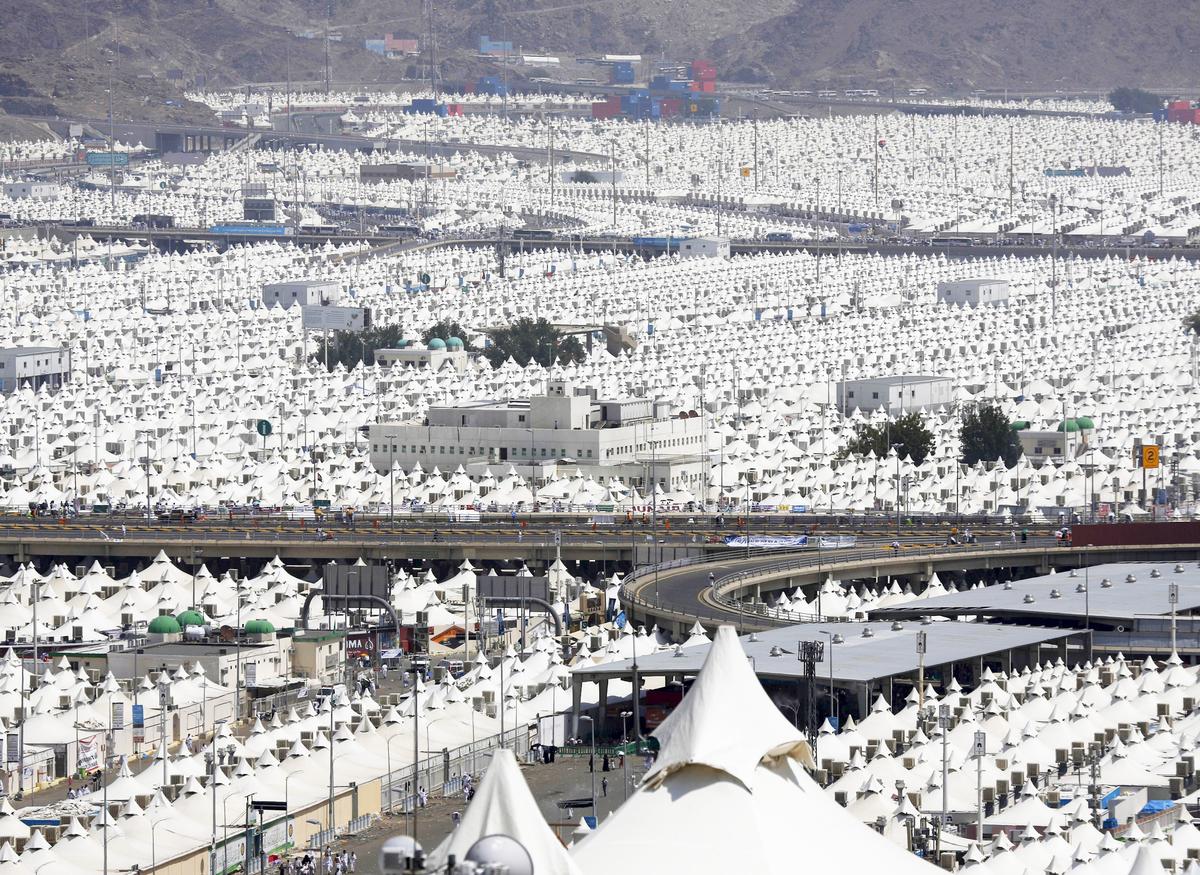
Mina is your base camp before the summit. Like a climber preparing for Everest, this is where you gather yourself. Tomorrow is the Day of Arafah - the day your entire life can change forever. The day Allah draws near and mentions you with pride to the angels. The day more people are freed from the Hellfire than any other day in the entire year. Prepare your heart tonight. Clean it out. Empty it of everything except Allah. Because tomorrow, you will need every chamber of that heart to be open and ready to receive His mercy.
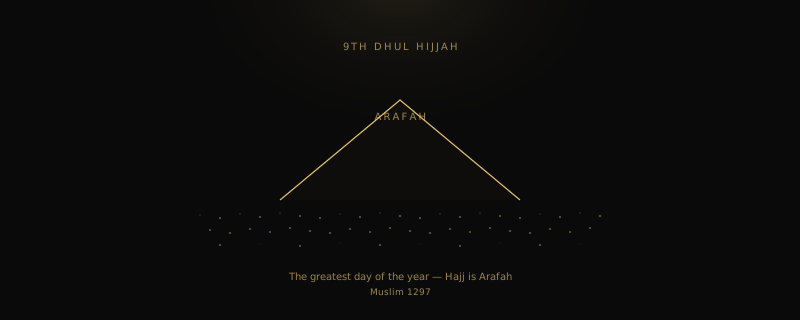
This is the most important day of Hajj. It is the most important day of the entire Islamic calendar. If you miss Arafah, you miss Hajj entirely.
After praying Fajr in Mina on the morning of the 9th, prepare to head to Arafah. There is no need to rush - the Sunnah of the Prophet (SAW) was to arrive at Arafah after midday (after the sun passes its zenith). The distance from Mina to Arafah is approximately 14 kilometres. Most pilgrims travel by bus, though the journey can take considerably longer than expected due to the sheer volume of people.
Throughout the journey, continue reciting the Talbiyah, Takbir, and Shahada:
Mohammed bin Abi Bakr al-Thaqafi said: “I asked Anas bin Malik regarding the talbiyah while on our way from Mina to Arafah, ‘How did you do it with the Prophet?’ Anas answered: ‘Those who said Talbiyah were not told to stop, and those who said Takbir were not told to stop.’”
Sahih al-Bukhari 1659This means there is flexibility - recite the Talbiyah, or say Allahu Akbar, or alternate between them. The key is that your tongue and your heart should be occupied with the remembrance of Allah throughout the journey.
There is no place on earth and no day in the year where the mercy of Allah is more abundantly available than the plain of Arafah on the 9th of Dhul Hijjah. This is not an exaggeration - it is established by multiple authentic ahadith and affirmed by the consensus of scholars across all four Sunni madhabs.
The Prophet (SAW) said: “Hajj is Arafah.”
Ahmad, Abu Dawud 1949, Tirmidhi 889, Nasai 3016, Ibn Majah 3015This statement is among the most concise and powerful in all of Prophetic guidance. It means that the standing at Arafah IS the essence of Hajj. Everything else - Mina, Muzdalifah, the Jamarat, the Tawaf - revolves around this single day. If a person performs every other rite of Hajj perfectly but misses Arafah, their Hajj is invalid. If a person misses everything else but makes it to Arafah within the valid time, they can still complete their Hajj.
Critical: Standing at Arafah is the ONLY pillar of Hajj with a specific, non-negotiable time requirement. You MUST be within the boundaries of Arafah between the time the sun passes its zenith (Zuhr) on the 9th of Dhul Hijjah and the dawn (Fajr) of the 10th of Dhul Hijjah. If you are not within the boundaries of Arafah during this window, your Hajj is INVALID and cannot be rectified.
The Prophet (SAW) said: “There is no day on which Allah frees more people from the Fire than the Day of Arafah. He draws near, then mentions them with pride to the angels, saying: ‘What do these people want?’”
Sahih Muslim 1348Pause and consider what this hadith is telling you. The Creator of the heavens and the earth - the One who has no need of anything or anyone - draws near to His servants on this day and mentions them with pride to the angels. About you. Dishevelled, dusty, exhausted, wearing nothing but two white cloths, indistinguishable from the person beside you - and Allah is proud of you. He asks the angels: “What do these people want?” - not because He does not know, but to honour you in front of the celestial creation.
This is also the day that the religion of Islam was perfected. A verse of such significance was revealed that a Jewish scholar recognised its weight:
A Jewish man said to Umar ibn al-Khattab (RA): “O Commander of the Faithful, there is a verse in your Book which you recite; if it had been revealed to us Jews, we would have taken that day as a festival.” Umar asked: “Which verse?” He said: “This day I have perfected for you your religion and completed My favour upon you and have approved for you Islam as religion.” (Quran 5:3). Umar replied: “I know the day and the place where it was revealed - it was on a Friday, and we were standing at Arafat.”
Sahih al-Bukhari 45This is also the place where, according to Islamic tradition, Adam (AS) and Hawwa (Eve) were reunited after being sent down to Earth - separated, alone, and repentant, they were brought back together on this plain. Arafah comes from the Arabic root meaning “to know” or “to recognise” - it is where they recognised each other again.
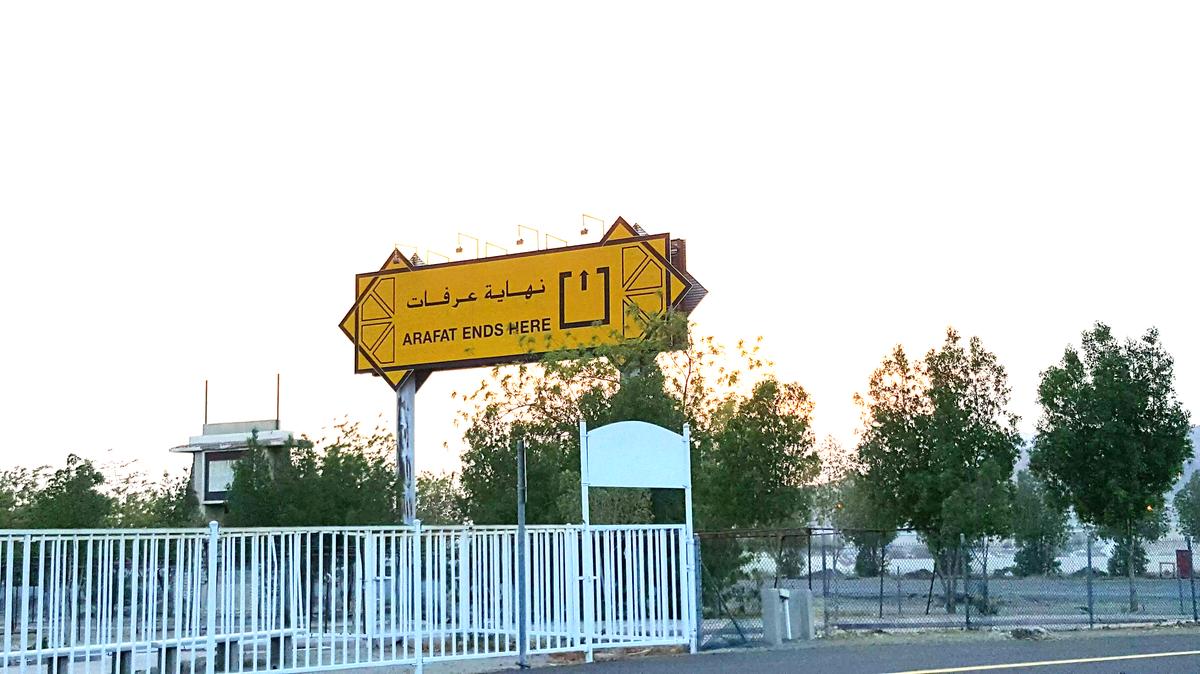
At Arafah, you will pray Zuhr and Asr combined at the time of Zuhr (jam’ taqdeem - combining by bringing forward), each shortened to 2 rak’ahs.
This is the exact practice of the Prophet (SAW) as narrated by Jabir (RA) in his detailed description of the farewell Hajj (Muslim 1218). The purpose of combining the prayers is to maximise the time available for dua and supplication on this blessed afternoon.
Hanafi position: Combining Zuhr and Asr prayers at Arafah is only permitted if praying behind the imam at Masjid Namirah. If praying elsewhere (such as at your tent), each prayer should be performed at its own time according to the Hanafi madhab. Maliki, Shafi’i, and Hanbali positions: Combining prayers at Arafah is permitted regardless of where you pray, as it is related to the rite of Hajj itself, not the location of Masjid Namirah. Follow your madhab, and if unsure, consult your group scholar.
The wuquf - the “standing” at Arafah - is the pillar (rukn) of Hajj. Here are the essential rules:
Warning: The Valley of Uranah (Wadi Uranah) is NOT part of Arafah. The Prophet (SAW) said: “All of Arafah is a place of standing, except the valley of Uranah.” (Muslim 1218). Masjid Namirah is partially in Uranah and partially in Arafah - if praying there, ensure you are in the Arafah section. When in doubt, move further into the plain.
After the combined Zuhr and Asr prayer, you have approximately five to six hours until sunset. These are, without exaggeration, the most valuable hours of your entire life. There is no moment where dua is more likely to be accepted, no place where Allah’s mercy is more accessible, no opportunity that will come again with this intensity.
Make dua. Then make more dua. Then make even more dua. Do not stop. Do not hold back. Do not think any request is too big or too small. Allah is the Lord of the heavens and the earth, and on this day, He is closer to you than He is on any other day of the year.
La ilaha illAllahu wahdahu la shareeka lahu, lahul-mulku wa lahul-hamdu, wa huwa ‘ala kulli shay’in qadeer
“There is no god but Allah, alone, without partner. His is the sovereignty and His is the praise, and He has power over all things.”
Tirmidhi 3585The Prophet (SAW) said: “The best supplication is the supplication of the Day of Arafah, and the best thing that I and the Prophets before me have said is: La ilaha illAllahu wahdahu la shareeka lah, lahul-mulku wa lahul-hamd, wa huwa ‘ala kulli shay’in qadeer.” (Tirmidhi 3585)
Here is how to spend the hours at Arafah:
Prepare a Dua List: Before Hajj, write down everything you want to ask Allah. Every person you want to make dua for. Every sin you want forgiven. Every hardship you want removed. Every blessing you want granted. Every dream you have. Write it all down on paper and bring this list to Arafah. When the emotion overwhelms you and your mind goes blank, your list will guide you.
The Golden Hour: The time after Asr until Maghrib is considered by scholars to be the most blessed time for dua on the Day of Arafah. The Prophet (SAW) was most intense in his supplication during this window. As the sun begins to descend, give it everything you have. Hold nothing back. This is the peak of the peak - the holiest hours of the holiest day of the holiest journey. Do not waste a single second of it.
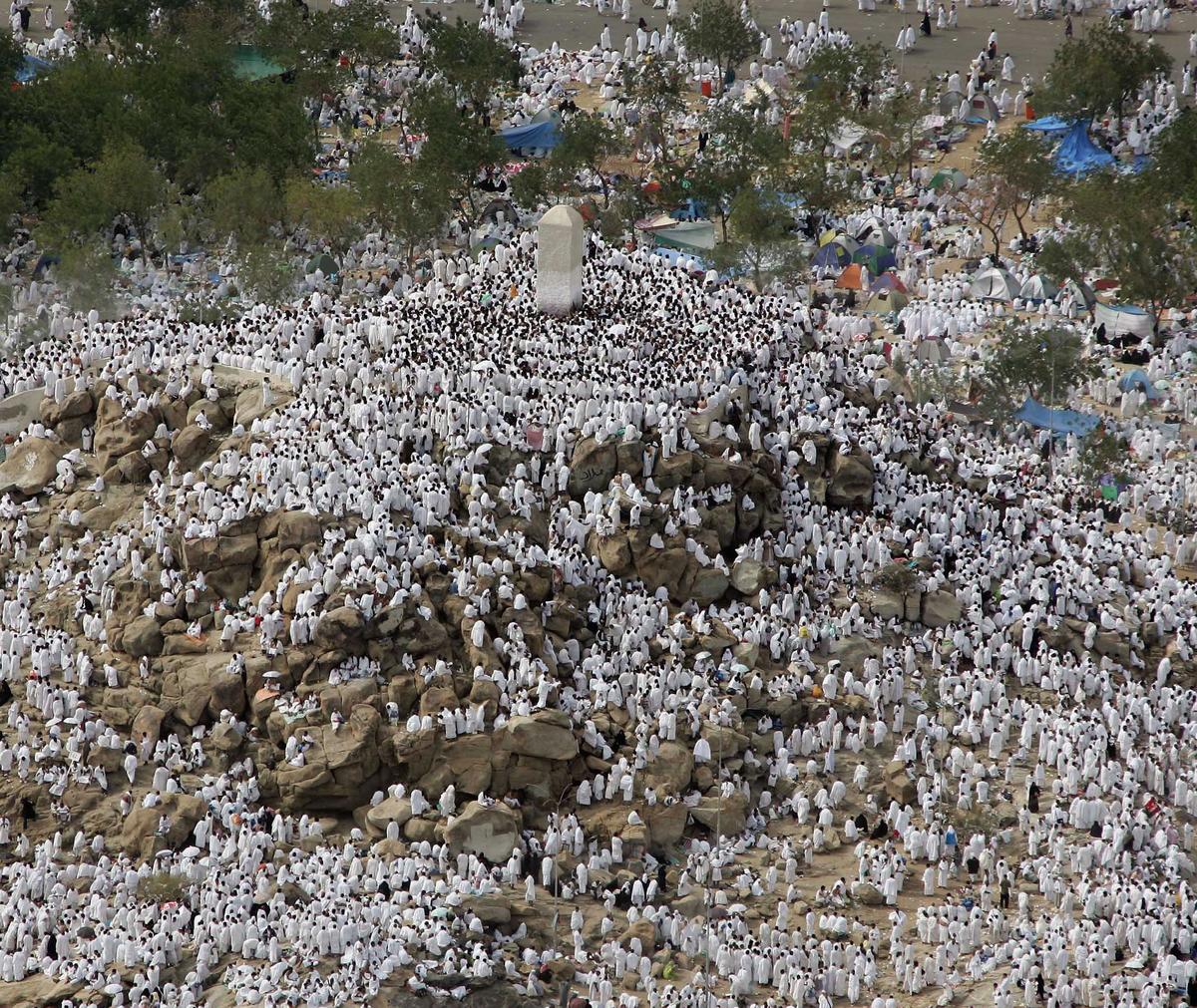
You are standing where the Prophet Muhammad (SAW) stood. You are wearing what the dead wear when they are wrapped for burial. You are equal with every other soul on that vast, sunbaked plain - no title, no wealth, no status, no distinction. The king and the cleaner stand side by side. The professor and the illiterate raise the same hands to the same Lord.
This is a rehearsal for the Day of Judgement. On that Day, there will be no second chance. But TODAY, on Arafah, Allah opens every door. He frees people from the Fire by the thousands. He mentions YOU with pride to the angels: “Look at My servants. They came to Me dishevelled, dusty, from every distant pass. Be My witnesses that I have forgiven them.”
Do not hold back a single tear. Do not leave a single dua unmade. Do not waste a single moment on anything other than communion with your Lord. This may be the only time you ever stand here. Make it count for eternity.
As the sun sets on the Day of Arafah, a new phase of the Hajj begins. The Prophet (SAW) stayed at Arafah until the disk of the sun had completely disappeared below the horizon, then departed calmly for Muzdalifah (Muslim 1218). Follow his example precisely.
Warning: Do NOT leave Arafah before sunset if you arrived during the daytime. The Prophet (SAW) explicitly waited until after sunset before departing. According to the majority of scholars (Hanafi, Maliki, Hanbali), leaving Arafah before sunset requires a damm (a sacrificial animal as penalty). The Shafi’i school holds that returning before Fajr removes the need for a damm. In either case, the Sunnah is clear: wait for sunset.
Important: You will NOT pray Maghrib at Arafah. Even if the time for Maghrib enters while you are still at Arafah or on the road, delay it. You will pray Maghrib combined with Isha at Muzdalifah. This is following the exact practice of the Prophet (SAW).
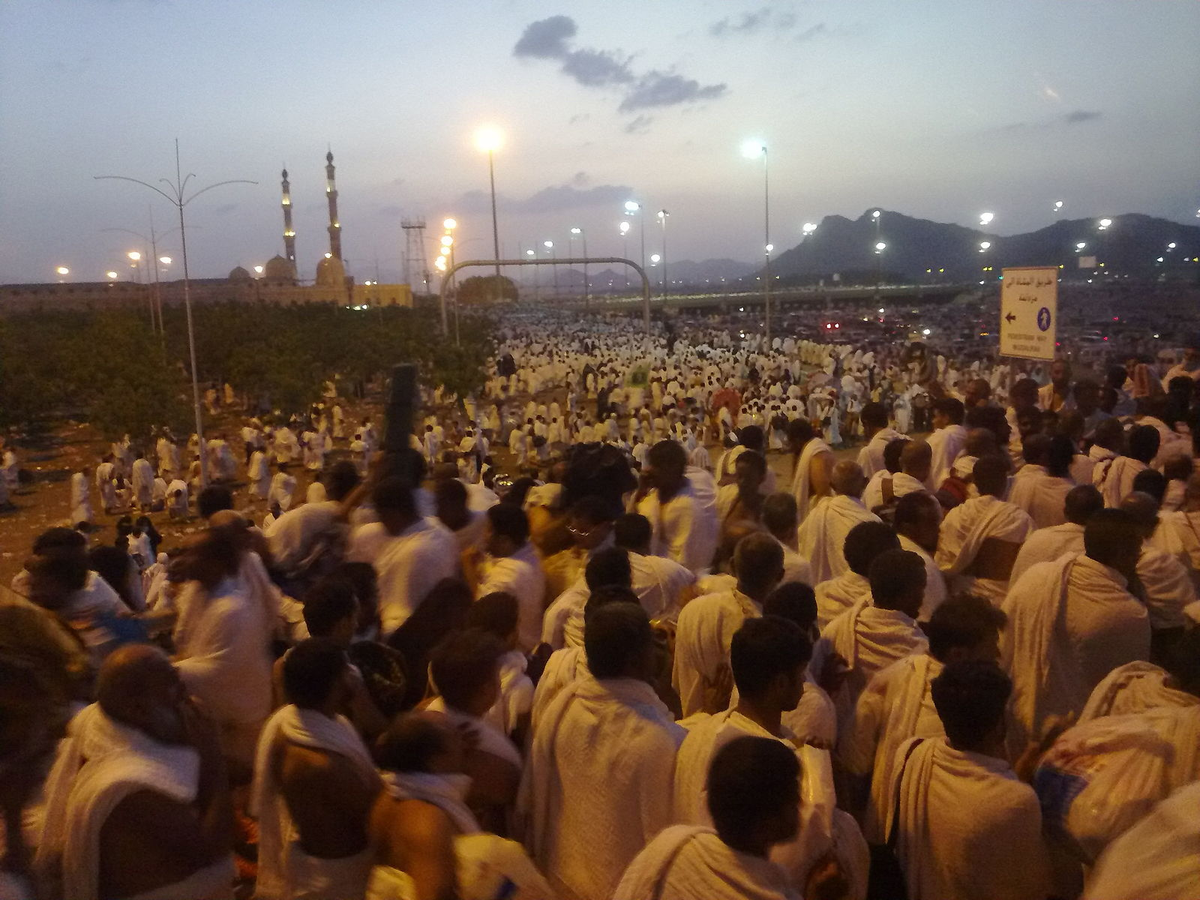
If you are severely delayed and fear that the time for Isha will also pass before reaching Muzdalifah, scholars advise praying Maghrib and Isha on the way rather than letting the prayer time expire entirely. However, under normal circumstances (even with significant delays), you should delay Maghrib to combine it with Isha at Muzdalifah as the Prophet (SAW) did.
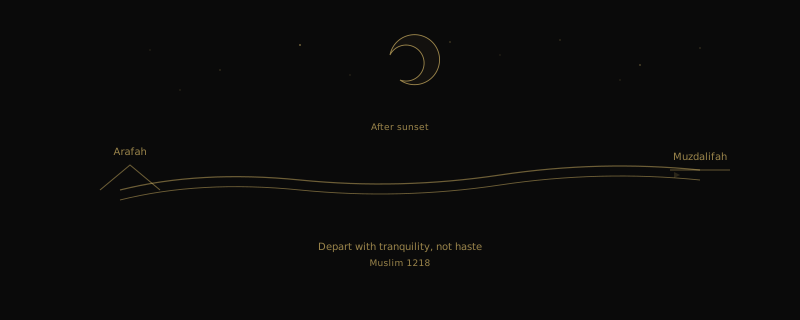
Muzdalifah is an open plain between Arafah and Mina. There are no tents here, no accommodation, no real facilities. This is where millions of pilgrims spend the night under the open sky - one of the most humbling and memorable experiences of the entire Hajj.
When you arrive, find any suitable spot within the boundaries of Muzdalifah and settle down. There are no assigned places - you simply find open ground.
The Prophet (SAW) said: “All of Muzdalifah is a place of standing, except the valley of Muhassir.”
Sahih Muslim 1218Warning: The Valley of Muhassir (Wadi Muhassir) is between Muzdalifah and Mina. It is NOT part of Muzdalifah. This is the valley where Allah destroyed the army of Abrahah and his elephant. Do not stop or camp in this valley. It is a place of punishment, and the Prophet (SAW) hastened through it (Muslim 1218).
Upon arrival, pray Maghrib and Isha combined at the time of Isha. This is one of the rare occasions in the Sunnah where prayers are combined at the later time (jam’ ta’kheer):
The Prophet (SAW) combined Maghrib and Isha at Muzdalifah, with one adhan and two iqamas, and he did not pray any voluntary prayers between them.
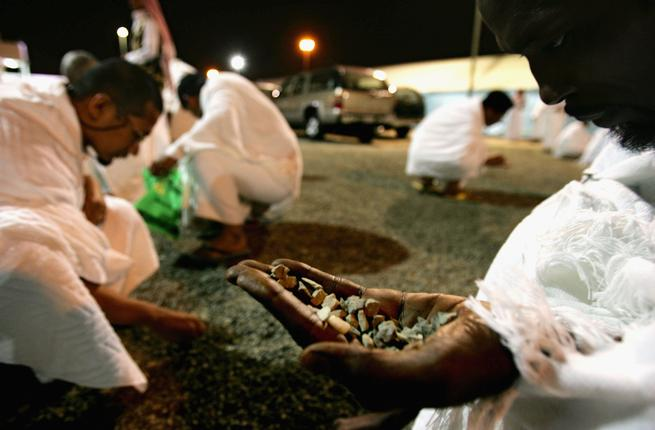
Sahih Muslim 1218At Muzdalifah (or later at Mina - both are permissible), collect pebbles for stoning the Jamarat over the coming days:
| Day | Jamarah | Pebbles Needed |
|---|---|---|
| 10th Dhul Hijjah | Jamrat al-Aqabah only | 7 |
| 11th Dhul Hijjah | All three Jamarat (7 each) | 21 |
| 12th Dhul Hijjah | All three Jamarat (7 each) | 21 |
| 13th Dhul Hijjah (if staying) | All three Jamarat (7 each) | 21 |
| Total | 70 (or 49 if leaving on the 12th) |
Tip: Washing pebbles before use is NOT required. This is a common misconception. There is no basis in the Sunnah for washing them. Simply collect them and use them as they are. You can also collect pebbles at Mina if you prefer - there is no requirement to collect them specifically at Muzdalifah.
After praying and collecting pebbles, you have the rest of the night. The Prophet (SAW) lay down and rested at Muzdalifah until Fajr (Muslim 1218). You should do the same if you are tired - you need energy for the big day ahead (the 10th). However, if you are not sleepy, spend the time in ibadah:
Pray Fajr early in Muzdalifah - as soon as the time enters. This is the Sunnah. Do not delay Fajr.
After Fajr, go to Al-Mash’ar Al-Haram (the Sacred Monument) - or face the Qiblah from wherever you are - and make dua. Continue making dua until the sky becomes very light (just before sunrise).
The Prophet (SAW) prayed Fajr early at Muzdalifah, then mounted his camel and went to Al-Mash’ar Al-Haram, faced the Qiblah, made dua to Allah, glorified Him, and said La ilaha illAllah. He remained standing (in supplication) until it became very bright, then he departed before the sun rose.
Sahih Muslim 1218Then depart for Mina before sunrise, following the Sunnah of the Prophet (SAW). When you reach the Valley of Muhassir, hasten your pace through it - the Prophet (SAW) sped up in this valley (Muslim 1218).
Not everyone can endure the full night at Muzdalifah. The Prophet (SAW) granted specific concessions:
Ruling on spending the night at Muzdalifah: According to the Hanafi, Maliki, and Hanbali madhabs, spending the night at Muzdalifah is wajib (obligatory), and missing it without a valid excuse requires a damm (sacrificial animal as penalty). According to the Shafi’i madhab, even a brief passing through Muzdalifah (even for a moment) after midnight is sufficient to fulfil the requirement. All four madhabs agree that the concession for the weak to leave after midnight is valid. Missing Muzdalifah entirely without excuse requires a damm according to the majority.
Muzdalifah is the calm between two storms - the overwhelming intensity of Arafah behind you, the frenzied busyness of the 10th ahead of you. Under the open sky, with millions of souls around you, you sleep on the bare ground like the poorest person on earth. No mattress. No pillow. No roof. No walls. Just you, the hard ground, the stars above, and Allah.
There is something profoundly humbling about lying on the earth with nothing between you and the sky. The same sky that Ibrahim (AS) looked up at when Allah showed him the stars and said “Such will be your descendants.” The same earth that will one day split open and return you to your Lord. Many pilgrims say that this night under the sky at Muzdalifah - not Arafah, not the Tawaf, not the Jamarat - is when Hajj feels most real. When the world falls away completely, and nothing remains except the soul and its Creator.
Saudi Arabia's official Nusuk app has added spiritual, navigation and health tools plus a zero-data offline mode, and no...
The Saudi Ministry of Hajj and Umrah has received the national AI ethics badge from SDAIA for its Nusuk AI service, as i...
Saudi Arabia's Ministry of Hajj and Umrah now requires a verified medical fitness certificate, processed through the Nus...
Nigeria's National Hajj Commission has fixed 2027 Hajj fares between N7.56 million and N7.88 million and reaffirmed 26 S...