Airports Serving Hajj & Umrah Pilgrims
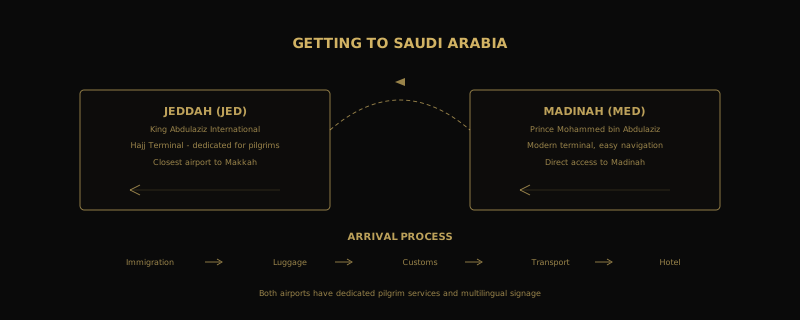
Most pilgrims arrive in Saudi Arabia through one of two main airports: King Abdulaziz International Airport (KAIA) in Jeddah or Prince Mohammed bin Abdulaziz International Airport in Madinah. Your choice depends on whether you plan to start your journey in Makkah or Madinah.
King Abdulaziz International Airport (KAIA), Jeddah
Jeddah’s airport is the primary gateway for Hajj and Umrah pilgrims. It has two main areas you should know about:
- Hajj Terminal (South Terminal): This massive open-air terminal is used exclusively during the Hajj season. It can process tens of thousands of pilgrims daily. If you are travelling on a Hajj visa, you will almost certainly arrive here. The terminal has its own immigration, customs and baggage facilities dedicated to pilgrims.
- Regular Terminals (North Terminal): If you are arriving on an Umrah visa or tourist visa outside of Hajj season, you will use the main terminals. Terminal 1 handles most international flights. The airport underwent a major expansion and the new terminal is modern and well-signposted in both Arabic and English.
Tip: The Hajj Terminal can be overwhelming due to the sheer number of people. Stay with your group and keep your documents in a secure, easily accessible pouch around your neck or in a front pocket.
Prince Mohammed bin Abdulaziz Airport, Madinah
Madinah’s airport is smaller and generally less crowded than Jeddah. Many pilgrims who plan to visit Madinah first choose to fly here. The airport is about 15 km from the city centre and the Prophet’s Mosque. Taxis and pre-arranged hotel transfers are readily available.
The Arrival Process
- Disembark and follow signs to immigration. Signage is in Arabic and English. During Hajj season, volunteers in coloured vests help direct pilgrims.
- Immigration: Have your passport, visa (printed or electronic), and vaccination certificate ready. Biometrics (fingerprints and photo) are taken at the counter. Queues during Hajj season can take 1-3 hours, so be patient.
- Baggage collection: Collect your luggage from the designated carousel. Label your bags distinctively - many pilgrims carry identical black suitcases.
- Customs: Saudi customs is generally straightforward. Prohibited items include alcohol, pork products, and certain medications without a prescription. If in doubt, declare it.
- Exit and transfer: Your tour operator should have representatives waiting outside. If travelling independently, taxis, Uber, and Careem are all available.
Important: Ensure your passport is valid for at least 6 months beyond your date of entry. Carry a printed copy of your visa, hotel booking and return ticket - immigration officers may ask to see them.
Luggage Tips
- Use a brightly coloured luggage strap or tag so you can easily identify your bag among thousands of similar ones.
- Pack essentials (medications, ihram, one change of clothes, phone charger) in your carry-on in case checked luggage is delayed.
- Keep luggage weight under the airline limit - typically 23 kg for economy. Remember you will likely bring items back (Zamzam water, gifts), so leave some room.
- Zamzam water is often provided as a separate allowance by airlines operating Hajj and Umrah flights - check with your airline.
- A small daypack or drawstring bag is essential for carrying items during Tawaf and Sa’i. Large bags are not allowed inside the Haram.