Footwear in Ihram - The Four Madhabs
Few practical questions cause as much confusion for first-time pilgrims as what to wear on their feet during Ihram. The Sunnah is clear in its essentials but the four Sunni schools of jurisprudence (Hanafi, Maliki, Shafi’i and Hanbali) differ on the details. Understanding these differences helps you choose footwear with confidence and avoid unnecessary fidyah (expiation).
The Hadith Evidence
Two narrations form the foundation of this discussion. The first is the well-known prohibition narrated by Ibn Umar (RA):
A man asked the Prophet (SAW), "What clothes should the Muhrim wear?" He replied: "He should not wear shirts, turbans, trousers, hooded cloaks, or khuffs (leather socks/boots), unless he cannot find sandals, in which case let him wear khuffs and cut them so they are below the ankles."
- Sahih al-Bukhari 1542, Sahih Muslim 1177The second narration is from Ibn Abbas (RA) and was delivered later, during the Farewell Hajj at Arafah:
I heard the Prophet (SAW) delivering a sermon at Arafah saying: "Whoever does not find sandals (na’layn), let him wear khuffs; and whoever does not find an izar, let him wear trousers."
- Sahih al-Bukhari 1841, Sahih Muslim 1178The crucial point is that the Ibn Abbas narration is later in time - it was delivered at the Farewell Hajj. Notice that it does not mention cutting the khuffs. The four madhabs differ on whether this later narration abrogates the earlier instruction to cut, or whether the two should be reconciled.
The Four Schools’ Positions for Men
Each of the four Sunni madhabs reaches a slightly different conclusion based on how they reconcile the two foundational hadith above. The illustrations beside each ruling show what kind of sandal that school considers acceptable.
Hanafi School
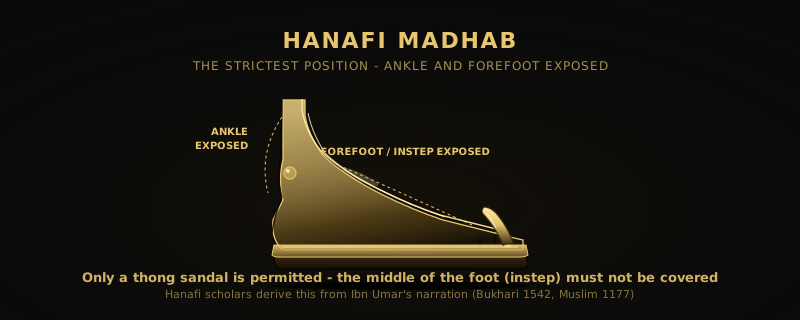
The Hanafi position is the most cautious. Footwear in Ihram must not cover:
- The ankle bones (ka’b)
- The small bone on the top of the foot where the shoelaces would normally tie (the joint of the foot)
If a man cannot find suitable sandals he may wear khuffs without cutting them, but he must offer fidyah (a sacrifice, fast or feeding the poor) for doing so. The Hanafis hold that the Ibn Abbas hadith permits wearing them but does not lift the obligation of fidyah, because the prohibition itself is rooted in Quranic principle.
Maliki School
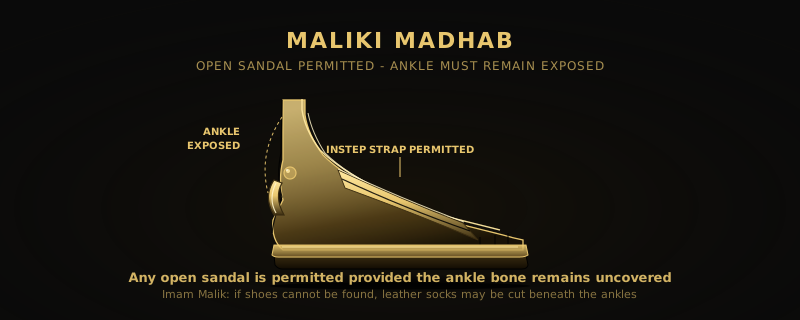
The Maliki position resembles the Hanafi in strictness. Footwear must expose:
- The top of the foot (the entire upper surface)
- The ankle bones
If sandals cannot be found, a man may wear khuffs but he must cut them below the ankles (following the Ibn Umar narration) and the dominant Maliki view is that he must still offer fidyah. Some Maliki scholars permit wearing them without cutting only when cutting itself would be impossible.
Shafi’i School
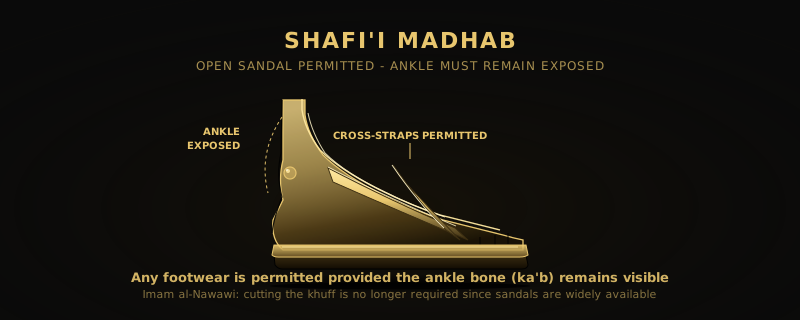
The Shafi’i position takes a middle path. The same restriction applies - sandals must not cover the top of the foot or the ankle bones. If a man cannot find sandals:
- He may wear khuffs only after cutting them below the ankles
- If he cuts them, no fidyah is due
- If he wears uncut khuffs out of necessity, fidyah becomes obligatory
The Shafi’i school treats the Ibn Umar hadith as the operative ruling and holds that the Ibn Abbas narration does not abrogate the obligation to cut.
Hanbali School
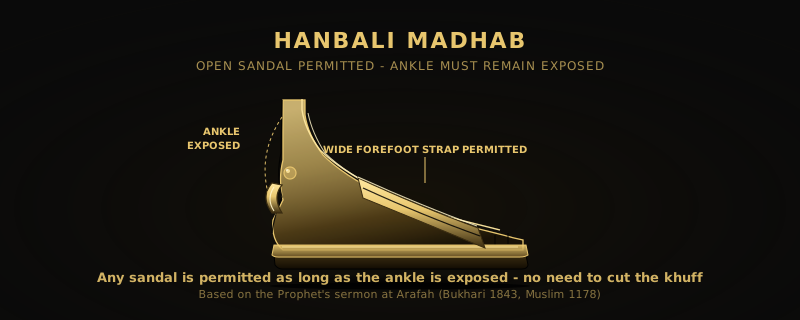
The Hanbali position is the most lenient and is taken by many contemporary scholars to be the strongest. They argue that the Ibn Abbas hadith from Arafah abrogates the earlier instruction to cut, because:
- It was delivered later in time (at the Farewell Hajj)
- It was a public sermon to the entire ummah at Arafah
- Cutting valuable leather is itself wasteful (israf), which Islam discourages
The Hanbali ruling is therefore: if a man cannot find sandals, he may wear khuffs without cutting them and without any fidyah. This is also the view adopted by Imam Ibn Taymiyyah, Ibn al-Qayyim, and many of the senior scholars of Saudi Arabia today, including the late Shaykh Ibn Baz and Shaykh Ibn Uthaymin.
Summary table for men:
| Madhab | Default rule | If no sandals available |
|---|---|---|
| Hanafi | Sandals only - feet and ankles exposed | Wear khuffs uncut + fidyah due |
| Maliki | Sandals only - feet and ankles exposed | Cut khuffs below ankles + fidyah (dominant view) |
| Shafi’i | Sandals only - feet and ankles exposed | Cut khuffs below ankles - no fidyah |
| Hanbali | Sandals preferred | Wear khuffs uncut - no fidyah |
Footwear for Women
This is one of the most reassuring rulings for sisters preparing for Hajj or Umrah: women have no specific footwear restrictions in Ihram. The prohibitions on covering the ankles and the top of the foot apply only to men. A woman in Ihram may wear:
- Closed shoes (sneakers, trainers, walking shoes)
- Sandals of any style
- Soft leather flats
- Socks beneath any of the above
The four madhabs are unanimous on this. A woman’s entire body except her face and hands is ‘awrah, and her feet are no exception. Her Ihram restrictions relate to her face covering (no niqab tied to the face) and her hands (no qaffaz/gloves), not her feet.
Tip for sisters: Choose footwear that is comfortable, supportive and modest over what is fashionable. Cushioned trainers or quality walking sandals will serve you far better than flat slip-ons across the kilometres of Tawaf, Sa’i and walking between Mina, Arafah and Muzdalifah. Many sisters find that closed-toe shoes also protect against sunburn on the top of the foot and the inevitable trodden toes in crowds.
Practical Guidance - Choosing & Breaking In Your Sandals
Whichever madhab you follow, the practical reality is the same: you will walk somewhere between 50 and 100 kilometres over the days of Hajj. Tawaf alone is roughly 1 km per cycle (and many pilgrims perform more than the obligatory ones). Sa’i adds another 3-4 km. The walks between Mina, Arafah and Muzdalifah can total 20+ km if you walk the Sunnah way. Add in trips to and from your hotel and the total quickly mounts.
What to Look For
- Cushioned sole - thick EVA or rubber. Hard leather soles will destroy your feet.
- Adjustable straps - your feet will swell in the heat. You will need to loosen them by day three.
- Quick-drying material - you will be making wudu constantly and walking through wet ablution areas.
- Good arch support - flat sandals are a recipe for plantar pain after the first day.
- Light colour - dark sandals absorb heat from the sun-baked marble of the Haram courtyards.
- Toe protection - a slightly raised front lip helps prevent stubbed toes in crowds.
Brands such as Birkenstock, Teva, Crocs LiteRide, Naot and the budget-friendly Chinese-made “Hajj sandals” sold in Makkah are all popular choices. Whatever you choose, ensure they meet the Ihram requirements of your madhab.
Breaking Them In - The Most Important Tip
Never wear brand-new sandals on day one of Hajj. This is one of the most common and most painful mistakes pilgrims make. New leather rubs. New straps cut. New soles slip. By day two your feet will be a map of blisters and you will spend Hajj limping rather than worshipping.
The solution is to buy your Hajj footwear at least 3 to 4 weeks before you travel and wear them every day in the lead-up. Specifically:
- Weeks 4-3 before Hajj: Wear them around the house for an hour or two each evening. This softens the straps without causing blisters.
- Week 2: Wear them outside on short walks - to the shops, to the masjid, around the park. Aim for at least 30 minutes of continuous wear.
- Week 1: Wear them for several hours at a stretch, including a long walk of 5+ km. By now they should mould to the shape of your feet.
- Travel day: Wear them on the plane. They should feel like an old friend by the time you land in Jeddah.
Pro tip: Always pack a backup pair in your suitcase. Sandals can break (the strap pulls out of the sole - it happens often), get lost outside the Haram (despite your best efforts), or develop a sudden problem on day five. A second broken-in pair waiting in your hotel room is cheap insurance for the most important journey of your life.
Carrying Your Sandals Inside the Haram
Inside Masjid al-Haram and the Prophet’s Mosque, you will need to carry your sandals during prayer (you cannot leave them at the entrance during peak times - they will likely be moved or taken). The accepted practice is:
- Bring a small drawstring bag or one of the free plastic bags handed out at the entrances of the Haram.
- Place the soles of the sandals together (sole to sole) so dirt does not transfer.
- Carry the bag with you during Tawaf and prayer.
Many pilgrims forget this small detail and find themselves walking barefoot on the scorching marble outside, or worse, losing brand-new sandals on day one. A 10p plastic bag prevents both.
A Final Word on Madhab Differences
The differences between the four schools on this issue are a mercy, not a contradiction. Each imam ruled based on the evidence as he understood it, and each position is rooted in the texts of the Sunnah. If you follow a particular madhab, follow its position. If you do not formally follow a madhab, the Hanbali position (no need to cut, no fidyah) is taken by many contemporary scholars to be the strongest based on the principle that the later, public ruling at Arafah takes precedence.
The most important thing is not to fall into wahn (anxiety) over your footwear. Allah is the Most Merciful. He has given us a religion of ease, not hardship. Choose your sandals carefully, break them in well, follow the position you are confident in, and focus your heart on the rituals - that is what Hajj is for.