Health & Medical Guide
Hajj is physically demanding, and the combination of heat, crowds, and exhaustion means health preparation is essential. With the right precautions, most pilgrims complete their journey without serious health issues.
Required & Recommended Vaccinations
| Vaccine | Status | Notes |
|---|---|---|
| Meningitis ACWY | MANDATORY | Must be taken at least 10 days before arrival. Carry the yellow vaccination card. |
| Seasonal Influenza | Highly recommended | Flu spreads rapidly among pilgrims. The Saudi MOH strongly recommends it. |
| COVID-19 | Recommended | No longer mandatory but wise, especially for elderly or immunocompromised pilgrims. |
| Pneumococcal | Recommended (elderly) | For pilgrims over 65 or with chronic lung conditions. |
| Routine vaccines | Should be up to date | Tetanus, diphtheria, polio, measles-mumps-rubella (MMR). |
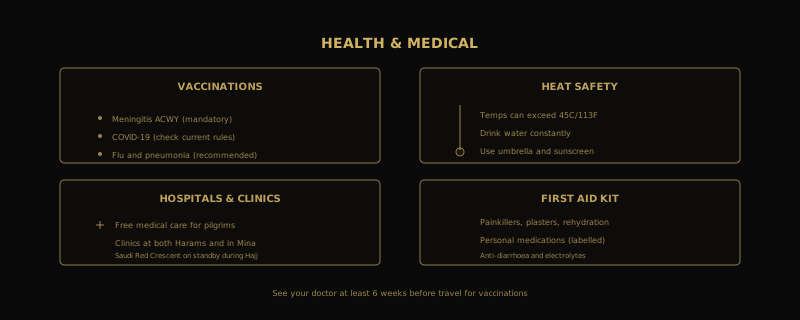
Without a valid Meningitis ACWY vaccination certificate, you will be denied entry to Saudi Arabia. This is strictly enforced. Get vaccinated at a travel clinic at least 2 weeks before departure.
Hospitals & Clinics Near the Haram
In Makkah: Several hospitals serve the Haram area, including Al Noor Specialist Hospital, Ajyad Hospital, and Hera General Hospital. During Hajj, the Saudi government sets up field hospitals and medical stations in Mina, Arafat, and Muzdalifah. Medical care is free for all pilgrims at government facilities during Hajj.
In Madinah: King Fahd Hospital and Ohud Hospital are the main public hospitals. Clinics also operate near the Prophet’s Mosque.
Pharmacies are plentiful in both cities. Many common medications are available over the counter in Saudi Arabia. However, carry enough of your regular prescription medications for your entire trip plus extra days in case of delays.
Avoiding Heat-Related Illness
This is the single biggest health risk during Hajj, especially when Hajj falls in summer months (temperatures can reach 45-50°C):
- Drink water constantly - at least 2-3 litres per day, more if walking in the sun. Do not wait until you feel thirsty.
- Use an umbrella - ideally a reflective or white one. This reduces direct sun exposure dramatically.
- Avoid peak sun hours (11 AM - 3 PM) for outdoor walking when possible.
- Wet your ihram/headscarf with water to cool down through evaporation.
- Recognise heat stroke symptoms: dizziness, nausea, confusion, hot dry skin, rapid heartbeat. This is a medical emergency - seek help immediately, move to shade, and cool the person with water.
- Use oral rehydration salts (ORS) to replace electrolytes lost through sweating.
First Aid Kit Essentials
- Paracetamol / ibuprofen for pain and fever
- Oral rehydration salts (ORS packets)
- Anti-diarrhoea medication (loperamide)
- Plasters / blister patches (you will walk a lot)
- Antiseptic cream and hand sanitiser
- Prescription medications (enough for the entire trip + spare)
- Sunscreen (SPF 50+)
- Throat lozenges (the “Hajj cough” is very common)
- Small scissors and safety pins
- Face masks (useful in crowds and dusty conditions)
The “Hajj cough”: Upper respiratory infections spread easily among millions of pilgrims in close quarters. Wash hands frequently, use hand sanitiser, consider wearing a mask in very crowded areas, and bring throat lozenges and cough medicine.
Saudi Red Crescent During Hajj
The Saudi Red Crescent Authority deploys thousands of paramedics and ambulances throughout the Hajj sites. They have stations at every major location in Mina, Arafat, and Muzdalifah, as well as along the pedestrian routes. If you or someone near you needs emergency medical help, look for the Red Crescent stations (clearly marked with red crescent signs) or call 997.