Hajj with Elderly or Disabled Pilgrims
Hajj is an obligation for those who are physically and financially able, but Saudi Arabia has made significant efforts to ensure that elderly and disabled pilgrims can also fulfil this duty with dignity and as much ease as possible.
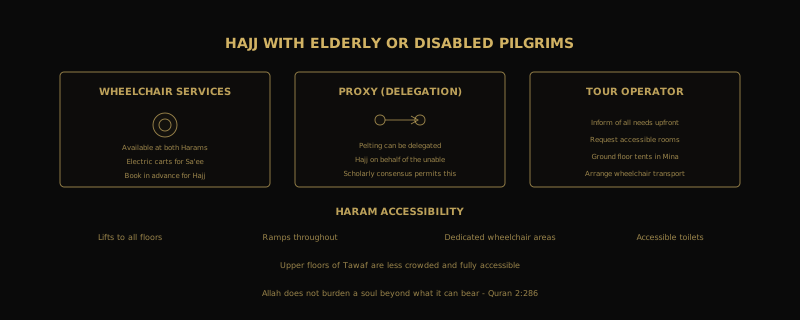
Wheelchair Services in the Haram
Masjid al-Haram in Makkah provides extensive wheelchair facilities:
- Wheelchair Tawaf is performed on the ground floor (Mataf area). There is a designated outer lane for wheelchairs. During busy times, a separate wheelchair Tawaf timing may be in effect.
- Free wheelchairs are available at the Haram, but demand is very high. If you need a wheelchair, it is better to bring your own or rent one from shops near the Haram (rental costs approximately 50-150 SAR per day).
- Wheelchair pushers can be hired to push you through Tawaf and Sa’i. Expect to pay 100-200 SAR per session. Agree on the price beforehand. Your tour operator may arrange this for you.
- The Haram has ramps and lifts to all floors, including the rooftop prayer area.
- The Sa’i area (between Safa and Marwa) is wheelchair accessible with smooth flooring on the ground level.
Tip: If you are in a wheelchair, performing Tawaf during off-peak hours (late night or early morning) is much easier and safer. The crowds are smaller and movement is smoother.
Accessibility in the Prophet’s Mosque (Madinah)
Masjid an-Nabawi is modern and generally wheelchair-friendly. Electric buggies operate in the large courtyard area to help elderly pilgrims reach the mosque entrances. The retractable roof areas and interior are accessible via ramps and lifts.
During the Days of Hajj
- Mina camps: Camps vary in accessibility. Premium camps may have better facilities. Discuss your needs with your tour operator well in advance and get written confirmation of the provisions.
- Arafat: Largely flat and tent-based, reasonably accessible for wheelchair users within the camp area.
- Muzdalifah: The terrain is uneven and facilities are minimal. This is the most challenging part for disabled pilgrims. Your group should plan how to manage this night.
- Golf carts/buggies: Motorised buggies operate in Mina and between the holy sites to transport elderly and disabled pilgrims. Your tour operator can arrange access.
Proxy for Pelting (Rami al-Jamarat)
If a pilgrim is physically unable to pelt the Jamarat themselves (due to disability, severe illness, or extreme old age), they may appoint a proxy (wakeel) to pelt on their behalf. The proxy should:
- Pelt their own stones first, then pelt on behalf of the person they represent.
- This concession is well established in Islamic jurisprudence and applies to any ritual that requires physical presence at a specific location.
Important: The Jamarat Bridge complex has been redesigned with multiple levels, wide walkways, and air conditioning. It is much more accessible than in the past. However, the sheer crowd volume still makes it challenging for wheelchair users. Pelting during off-peak hours or using a proxy is strongly advised.
Tour Operator Responsibilities
When booking a Hajj or Umrah package as an elderly or disabled person:
- Inform your tour operator in detail about your mobility needs at the time of booking.
- Ask for a hotel as close to the Haram as possible - this makes the biggest practical difference.
- Confirm in writing what wheelchair, buggy, and assistance services are included in your package.
- Ensure they assign a dedicated helper for the Hajj days if needed.
- Discuss the Muzdalifah arrangements specifically, as this is often the weakest point in accessibility planning.