Hajj with Children
Our strong advice: Hajj with young children is not recommended. The extreme heat (often 45-50°C), massive crowds, long walks, overnight stays on open ground at Muzdalifah, and the physical demands of pelting make Hajj genuinely dangerous for small children. Young children can also be a significant distraction, preventing parents from fully focusing on their worship during what may be a once-in-a-lifetime spiritual experience. If at all possible, arrange for your children to stay with family and perform your Hajj without them. Only bring children if there is truly no other option.
That said, if you have no choice and must bring your children, the guidance below will help you prepare.
Islamic Ruling on Children’s Hajj
A child’s Hajj is valid and rewarded, but it does not count as the obligatory Hajj. When the child reaches puberty, they will still need to perform Hajj again as their fard (obligatory) Hajj. This is based on the hadith in which a woman lifted her child and asked the Prophet (peace be upon him): “Is there Hajj for this one?” He replied: “Yes, and you will have a reward.” (Muslim)
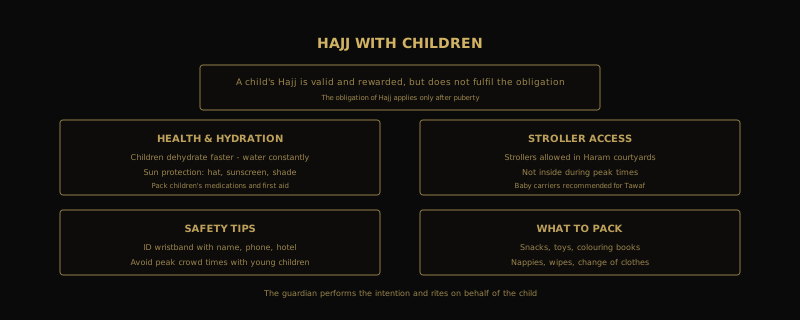
For a child who has not reached the age of discernment (roughly 7 years), the parent makes the intention on behalf of the child and guides them through the rituals. An older child who understands can make their own intention with parental guidance.
Practical Tips for Hajj with Children
- Keep expectations realistic. Children cannot maintain the same pace or endurance as adults. Build in extra rest time and be prepared to simplify your schedule.
- Wristbands with information: Put a wristband or tag on your child with your name, phone number, hotel name, and tour group name written in both English and Arabic. If they get separated, this information is critical. Take a clear photo of your child each day showing what they are wearing.
- Choose less crowded times for Tawaf and Sa’i. Late night and early morning are usually best. The upper floors and rooftop of the Haram are also less crowded for Tawaf.
- Carry them during Tawaf if they are small. A baby carrier (soft structured carrier or wrap) is much better than a stroller for Tawaf due to the crowds.
- Assign one parent per child in crowded situations. Never assume the other parent has the child - communicate clearly.
Safety in crowds: The most dangerous times for children are during the movement between Hajj sites (Mina to Arafat to Muzdalifah) and at the Jamarat. Hold children close or carry them. Consider using a proxy for pelting rather than taking small children to the Jamarat Bridge during peak times.
Keeping Children Hydrated & Healthy
- Children dehydrate faster than adults. Offer water constantly, even if they say they are not thirsty.
- Carry oral rehydration salts (child-appropriate doses) in case of diarrhoea or vomiting.
- Use sunscreen (SPF 50+) on all exposed skin and keep them shaded with an umbrella or hat.
- Bring child-friendly snacks that travel well: dates, nuts, crackers, dried fruit, cereal bars.
- Watch for signs of heat exhaustion: lethargy, crankiness, flushed skin, not urinating. Move to shade and cool them immediately.
- Ensure any medications (children’s paracetamol, allergy medicine, etc.) are packed and accessible.
Stroller Access
Strollers can be used in certain areas:
- Around the Haram: The large courtyards and outer areas accommodate strollers. However, strollers are generally not practical inside the mosque during busy times. Gate security may not allow them in during peak hours.
- For Sa’i: The ground floor is flat and can accommodate a stroller, but crowds make it difficult.
- In Mina: The roads between tents can be navigated with a stroller, though surfaces are uneven in places.
- A lightweight, compact umbrella stroller is better than a large travel system. You will be folding and carrying it frequently.
What to Pack for Children
- Children’s medications (fever reducer, antihistamine, rehydration salts)
- Comfortable, lightweight clothing (several changes)
- Snacks and a refillable water bottle
- Small toys or colouring book for downtime (keep it minimal)
- Baby carrier or sling (for under-3s, far more practical than a stroller)
- Sun hat and child-size umbrella
- Wet wipes and hand sanitiser (lots)
- Nappies and changing supplies if needed
- ID wristband with parent contact details
- Comfort item (small blanket or toy) for sleeping in unfamiliar surroundings
Tip: Make the experience meaningful for older children. Explain what each ritual means in age-appropriate language. Let them drink Zamzam water and make their own du’a. This can become one of the most formative spiritual experiences of their lives.